
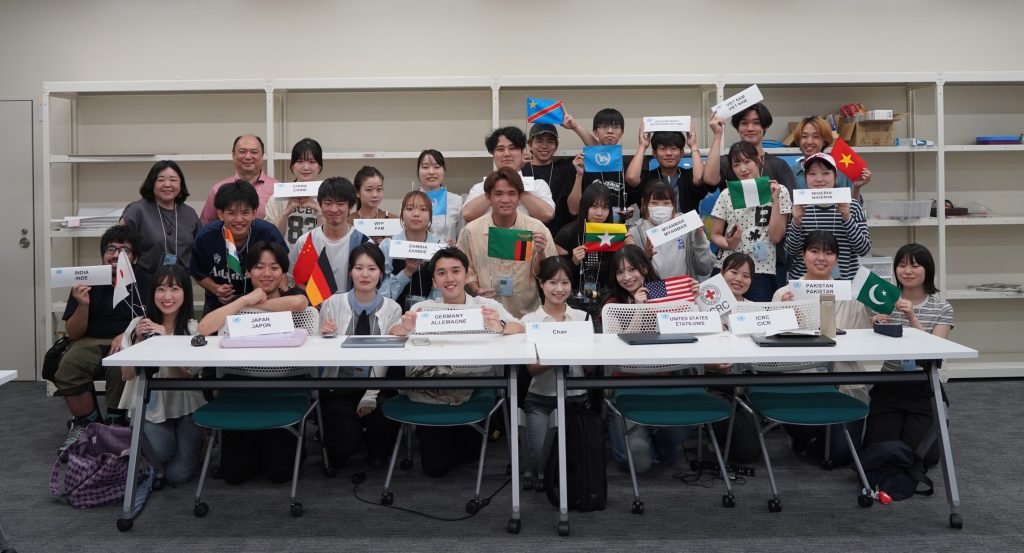
On July 28, 2026, as part of the Liberal Arts Course “Introduction to International Cooperation and Security” taught by Professor YASUTOMI Atsushi and Associate Professor SEKO Motoko, held our annual “Model United Nations” event (We also held the English-language Model United Nations on a different day).
This year’s theme is “Reducing the number of people suffering from hunger worldwide to at least 100 million.” The students were divided into groups representing 12 countries—including permanent members such as the United States and China—and three international organizations, such as the ICRC, and engaged in discussions while taking into account their respective positions and interests.
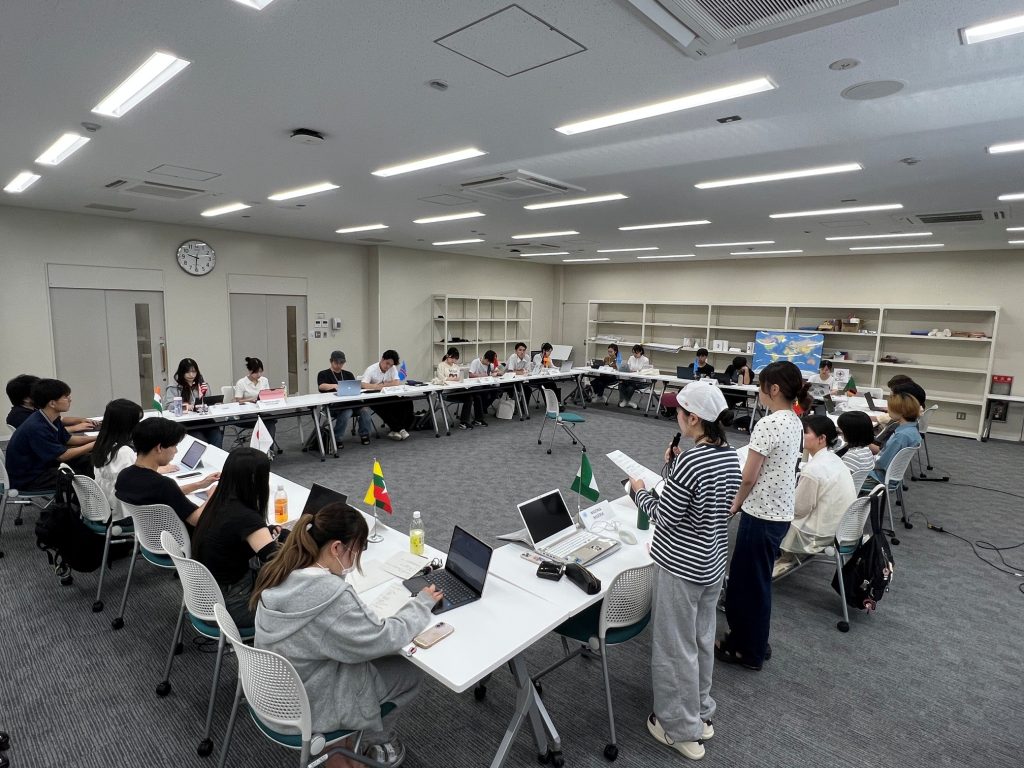
At the conference, participants conducted a multifaceted examination of the underlying causes of food insecurity and famine, and discussed how the international community should work together to address the global hunger crisis—which is being exacerbated by conflicts and climate change. Each country and organization expressed its views based on its own interests and policies, gaining firsthand experience of the challenges involved in reaching consensus within the international community.
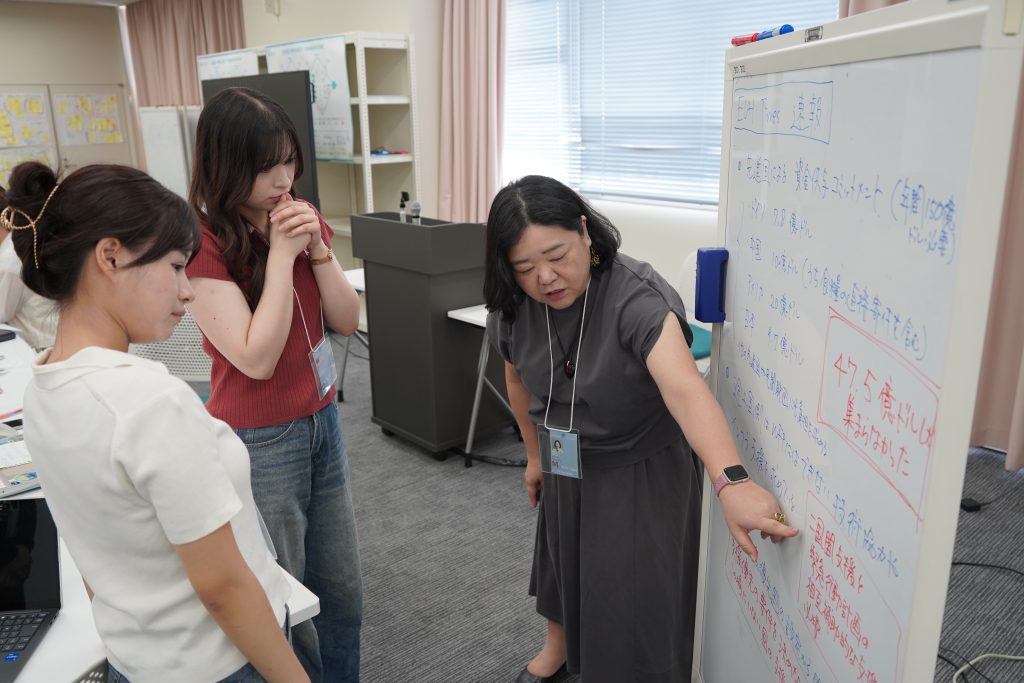
The students took on the roles of ambassadors from their assigned countries and representatives of international organizations, actively engaging in behind-the-scenes negotiations and bilateral discussions with other countries not only during the conference but also during breaks. Negotiations to gain support, exchanges of views, and coordination toward joint proposals took place throughout the event, and the classroom was filled with the same sense of tension and energy as an actual international conference.
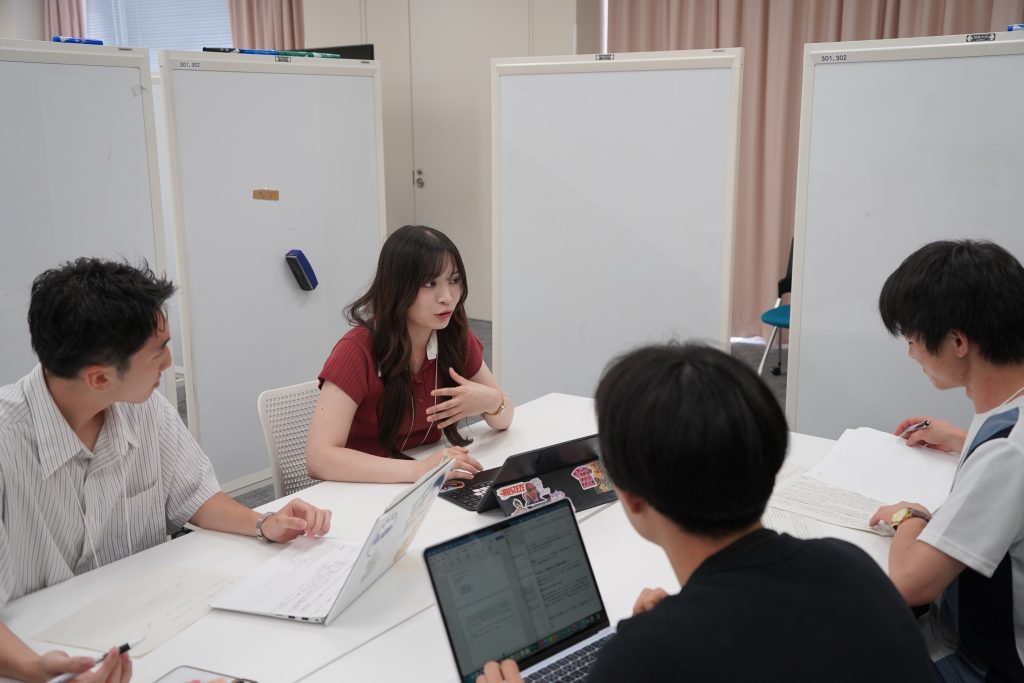
Through negotiations and policy proposals that took into account the positions of various countries and organizations, students learned that in the international community, it is not enough to simply advocate for ideals; rather, it is crucial to seek consensus while balancing differing interests and priorities. The hands-on experience gained through the Model United Nations not only deepened their understanding of international cooperation and security but also provided a valuable learning opportunity to proactively engage with diplomatic negotiations and policy-making.
In this way, our university provides a Liberal Arts education that equips students with the knowledge and approaches necessary to understand the various challenges of modern society, while fostering the competencies of “Global Collaboration”, “Foresight”, “Strategy”, “Energetic Drive” and “Self-Improvement” that will enable them to thrive in a global society.