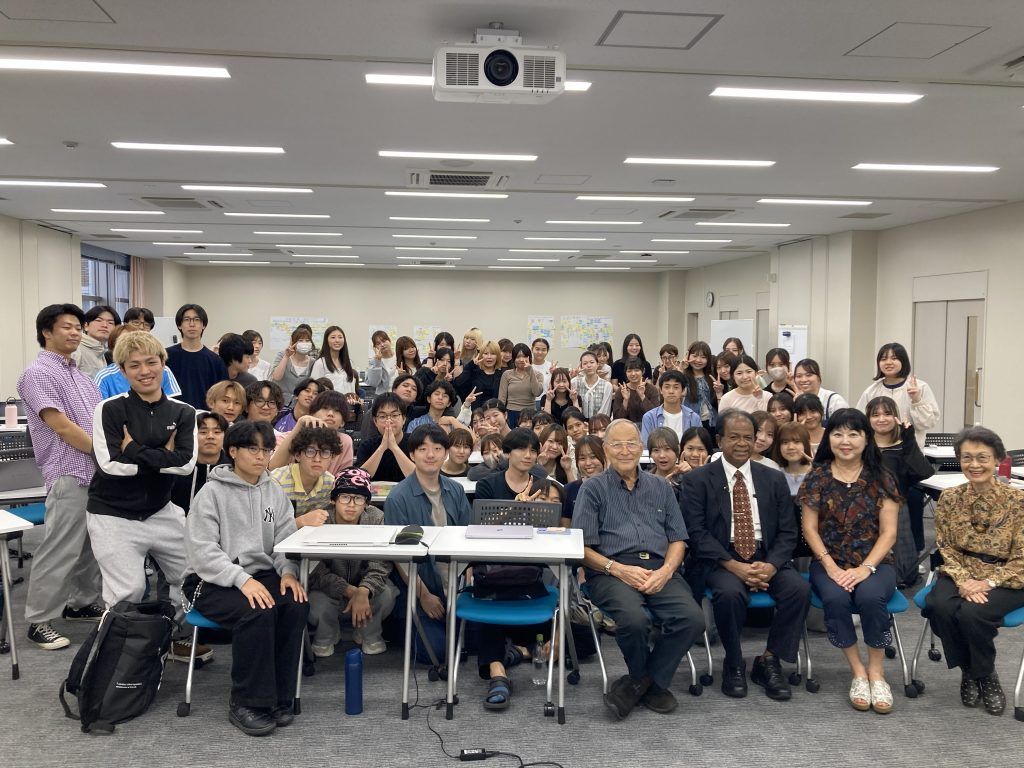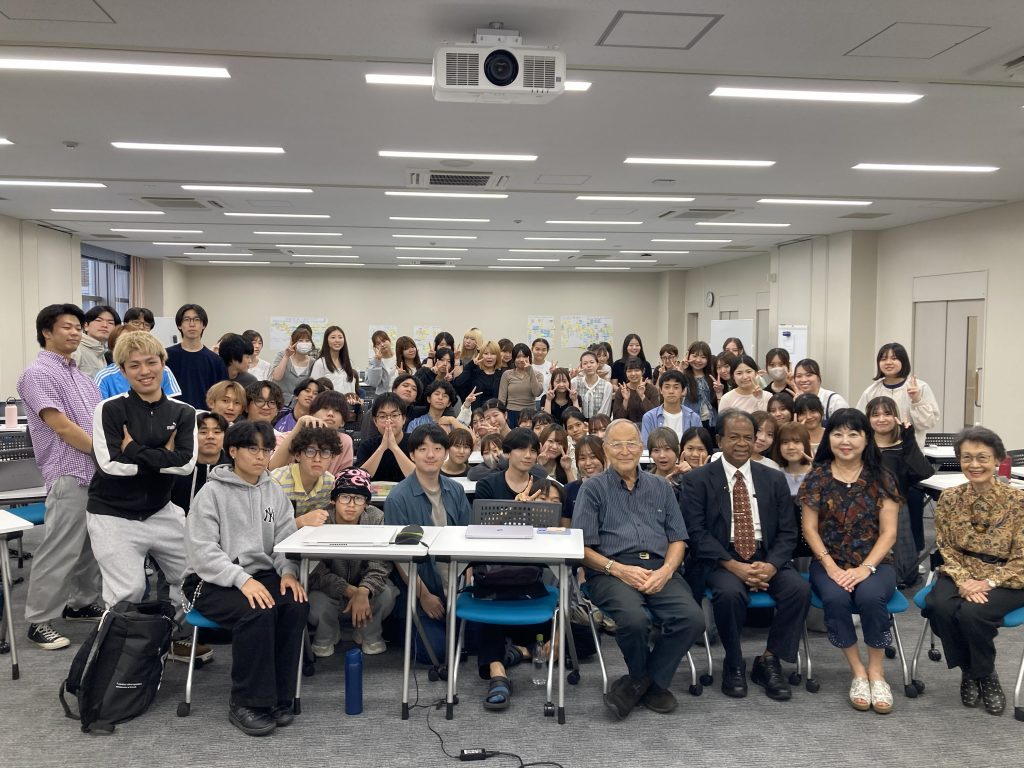
On July 1, 2026, Eikei University welcomed Professor Ananda Kumara for the annual IEP Special Lecture titled “Empowering Youth in a Global Era: Challenges and Pathways to Revitalizing Japanese Society.” Three distinguished guests—Ms. Nobuko Miyake-Stoner and Mr. Bob Stoner from Hawai‘i, and Professor Emeritus Hajime Nishitani of Hiroshima University—joined the event.
This lecture was organized by Professor Yuko Uesugi, a Board Member and Chair of the Chugoku–Shikoku Chapter of the Japan Association for Global Competency Education (JAGCE), and was made possible through ongoing collaboration and exchange within the association, following last year’s successful event.
Lecture Overview
Professor Kumara began by reflecting on his arrival in Japan in 1983 as a graduate student with no Japanese proficiency. He highlighted how the dramatic evolution of communication technologies—from costly international phone calls to today’s free, internet-based communication—has transformed global interaction and work styles. He also shared his decision to pursue doctoral studies in Japan among scholarship offers from several countries, emphasizing his interest in Japanese technology and his desire for an intercultural challenge.
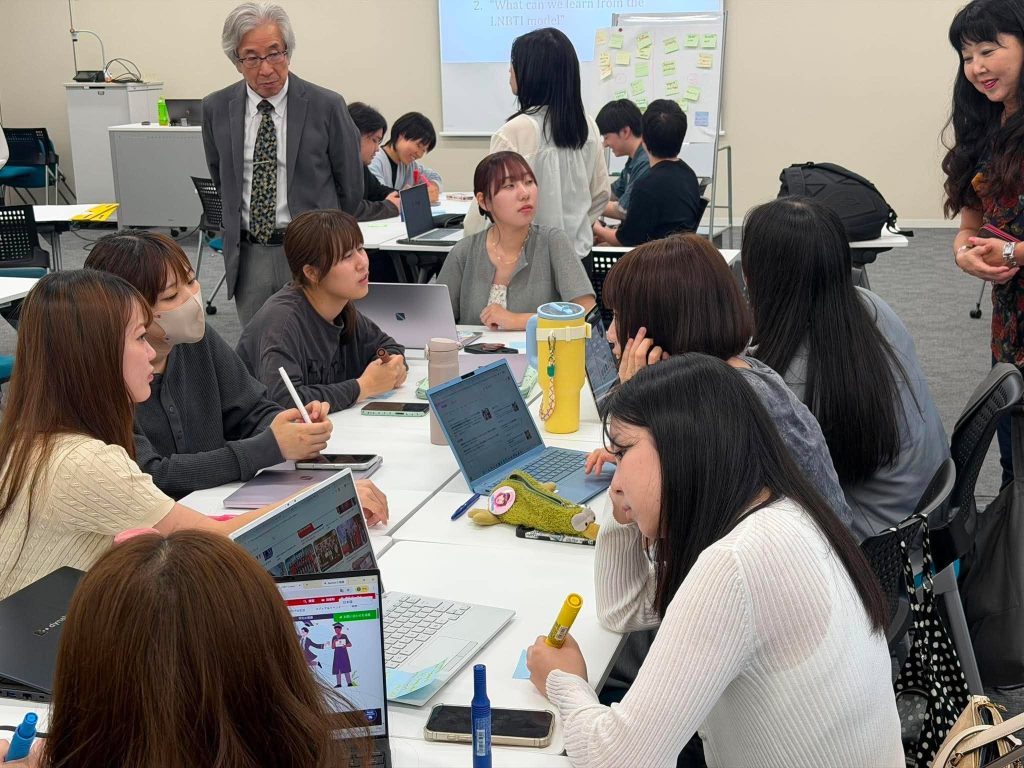
In the subsequent session, students engaged in discussions envisioning society 10 to 40 years into the future. They exchanged ideas on the advancement of AI, the spread of autonomous vehicles and EVs, innovations in renewable energy, and the deepening of demographic aging—leading to a lively exploration of future societal possibilities.
Higher Education and Globalization in Japan
Professor Kumara addressed the impact of Japan’s declining population on university enrollment, noting that even as AI and robotics advance, the essential role of human creativity in generating new ideas and work remains unchanged. He also pointed to the increasing number of international students and the expansion of English-medium instruction as clear indicators of Japan’s steady progress toward globalization in higher education.
Students’ Strengths and Weaknesses
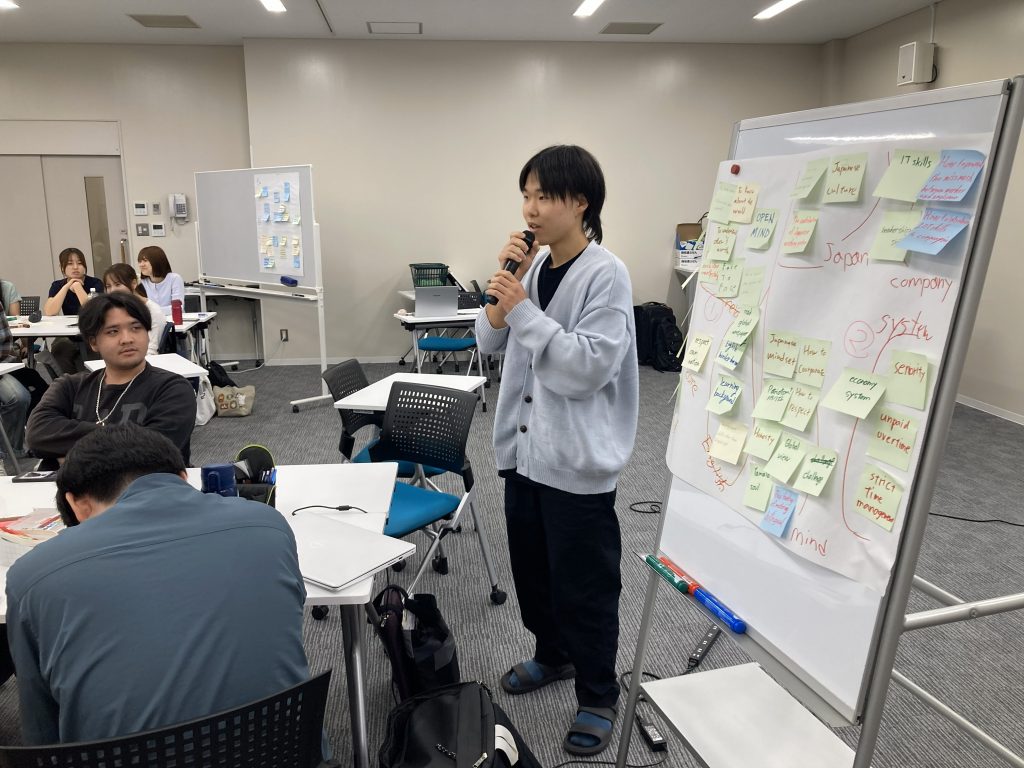
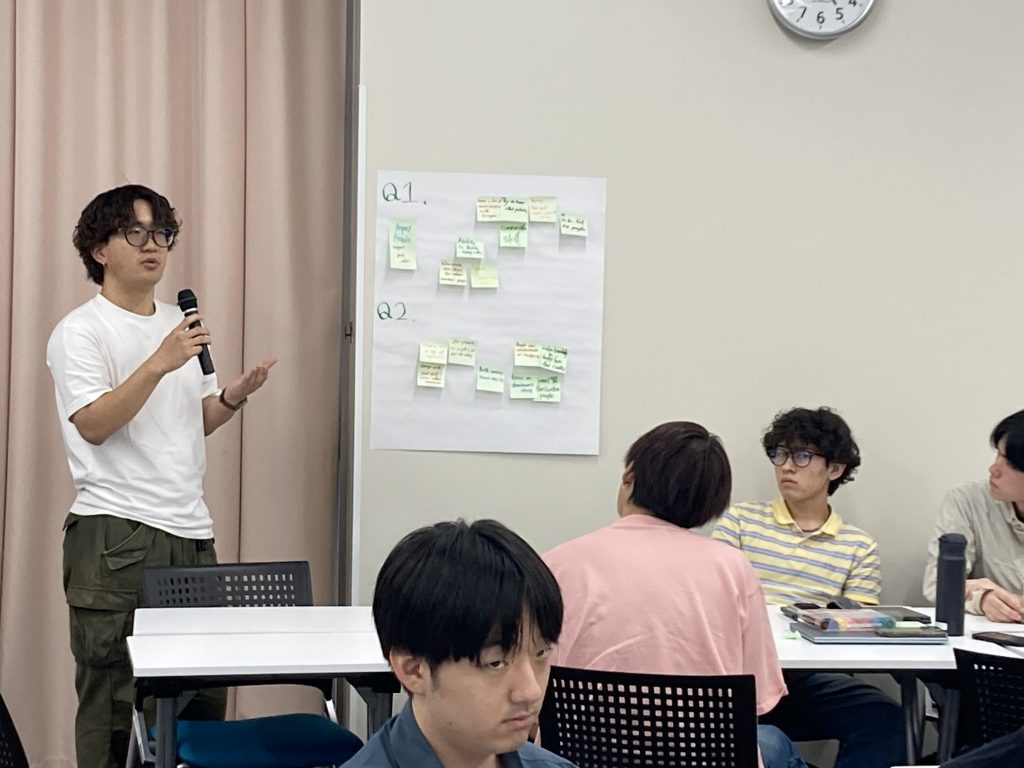
Students shared their perceptions of their own strengths—such as communication skills, cooperation, sincerity, and humility—while also acknowledging challenges including limited assertiveness, English proficiency, and presentation skills. Professor Kumara emphasized the importance of language ability, public communication, and intercultural understanding as key competencies for global engagement.
Global Human Resource Development and the LNBTI Model
Professor Kumara introduced the educational model of LNBTI in Sri Lanka, which promotes the pathway “Study in Sri Lanka, work in Japanese companies.” This model aims to address Japan’s IT talent shortage while expanding employment opportunities for young people in South Asia. He explained how global production structures are shifting from “Made in Japan” to “Made by Japan,” presenting new forms of international collaboration.
Message to Students
In closing, Professor Kumara presented five essential components of global competence:
- Curiosity
- Forwardness
- Communication ability
- Foreign language proficiency
- Intercultural understanding
He encouraged students to recognize their strengths and weaknesses and to continue learning proactively with intrinsic motivation.
The lecture and workshop, lasting approximately three hours and forty minutes, offered students a highly stimulating and meaningful learning experience, deepening their perspectives on how to thrive in a global society. Numerous questions were raised, and Professor Kumara expressed strong appreciation for the enthusiasm and intellectual curiosity demonstrated by Eikei University students. As an organizer, Prof. Uesugi was delighted to witness students’ growth firsthand and found the event deeply rewarding.
Prof. Uesugi will continue to host IEP special lectures each quarter, providing students with valuable opportunities to learn from external experts and broaden their global competencies.