
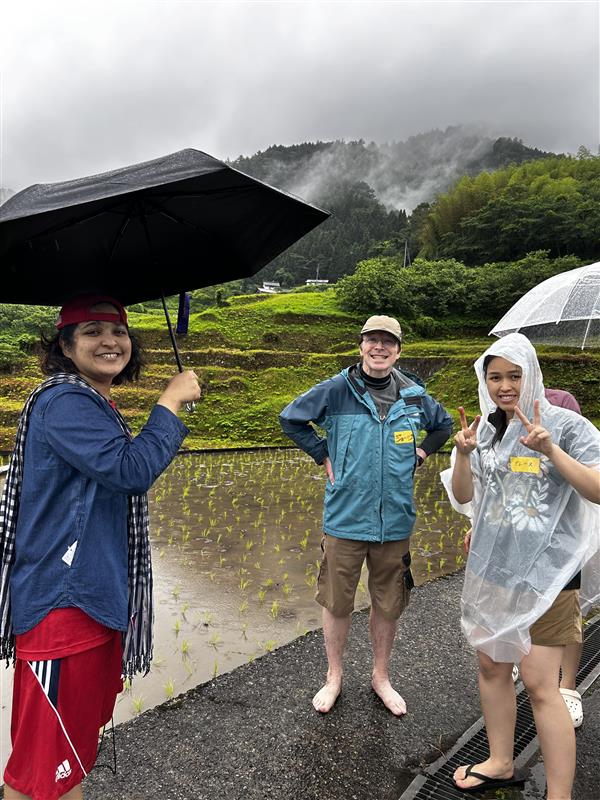
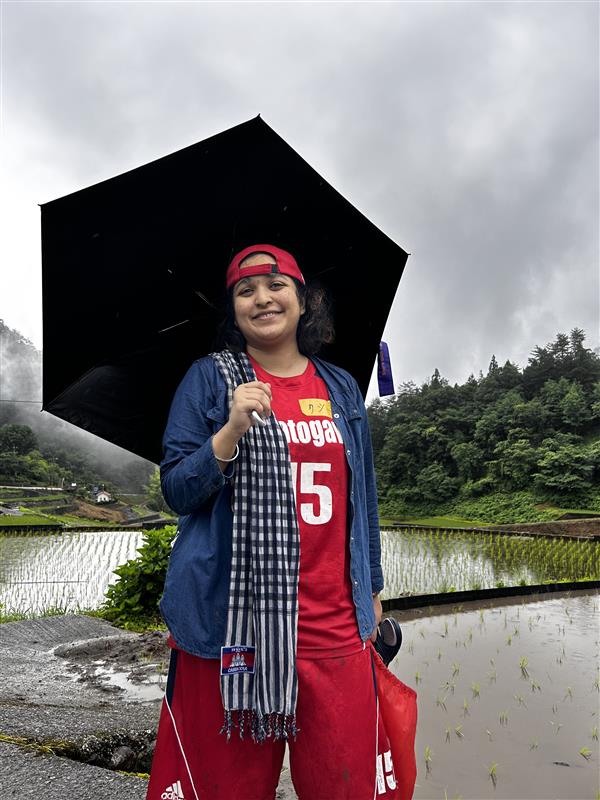
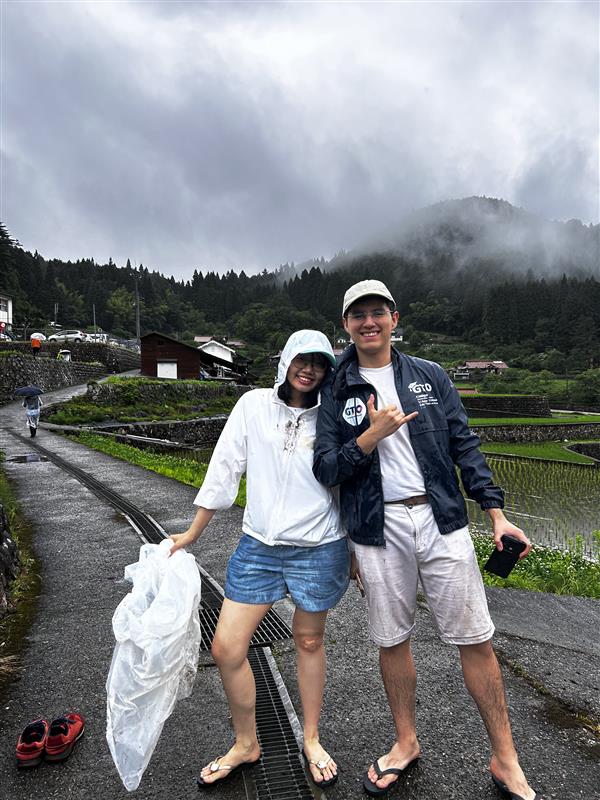
On June 7th, 10 international students from Eikei went to Ini (near Akiota) to help with the rice-planting and experience a traditional farming village.
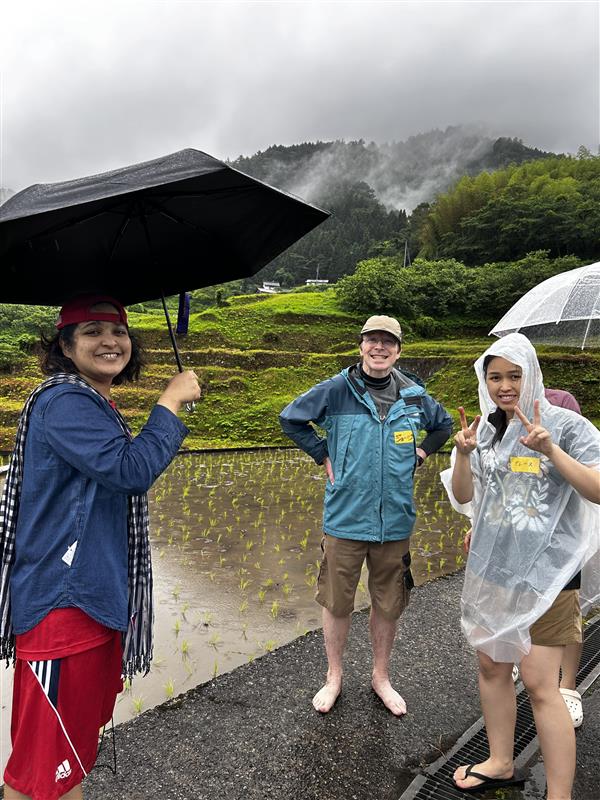
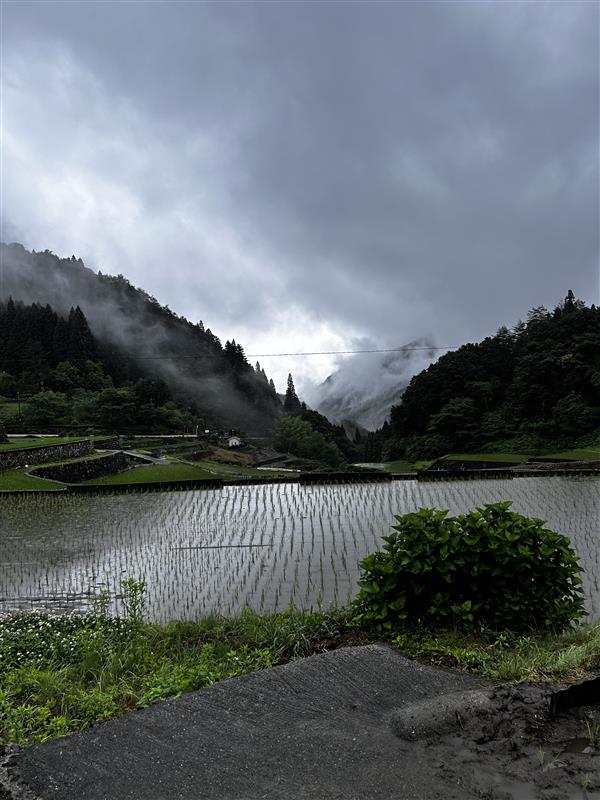
It is a famous village in Hiroshima due to the many small, terraced rice paddies that climb up the valley. Unfortunately, due to an aging (shrinking) population this traditional landscape is under threat, so the locals are happy to get outside help during the labor-intensive times of year. As the terraced fields are too small for large machines, most of the work needs to be done by hand, which is hard work for many of the locals who continue working in the fields well into their 70s. Some of the locals told us that a generation before there were around 200 families living in the valley, but that was now down to just 120 people, most of whom are over 60.
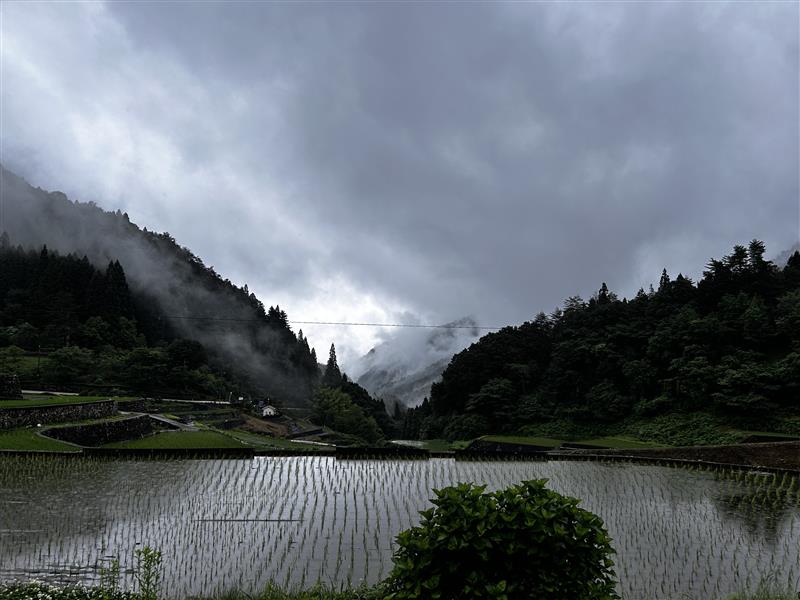
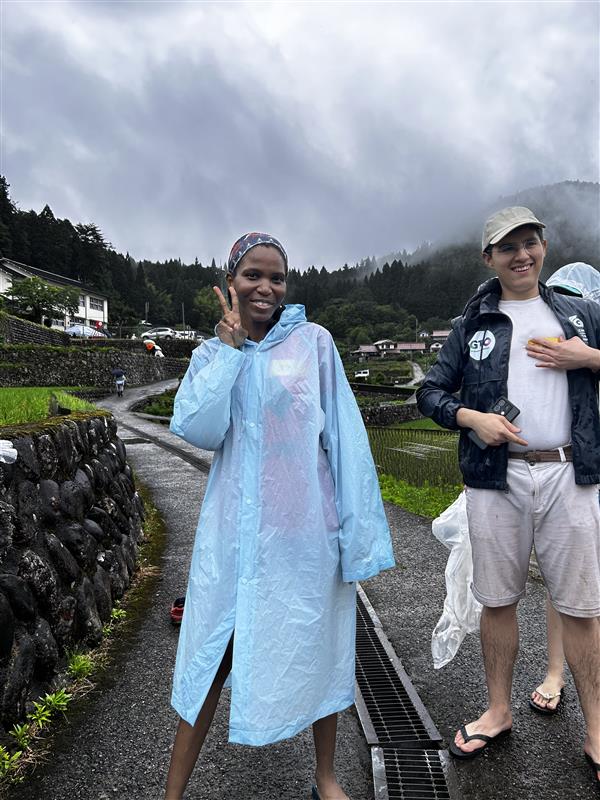
One thing that we all noticed as soon as we got out of the car was the clean air and abundance of nature that we had come to. In contrast to the city we had come from, there were frogs, tadpoles, and insects everywhere. As it is the rainy season, it was no surprise that it rained on the day we went, but as we were intending to get wet (and muddy) anyway that did not make too much difference to the rice-planting. We were joined on that day by other volunteers, such as a group 3 of international students from Hiroshima University.
After we had planted a few fields we were invited back to the community hall to eat lunch together. The main dish was of course rice (with miso soup) but other local plants (warabi, bamboo) also made it onto our plates.
We had hoped to have a walk around the village after lunch (or in the forest) but as it was raining we decided to leave that for another day. Before we left, we were invited to return for the harvest, in September or October. As usual our thanks goes to Kurihara-sensei (a friend of Eikei) who helped with transport and coordinating our trip to Ini.