
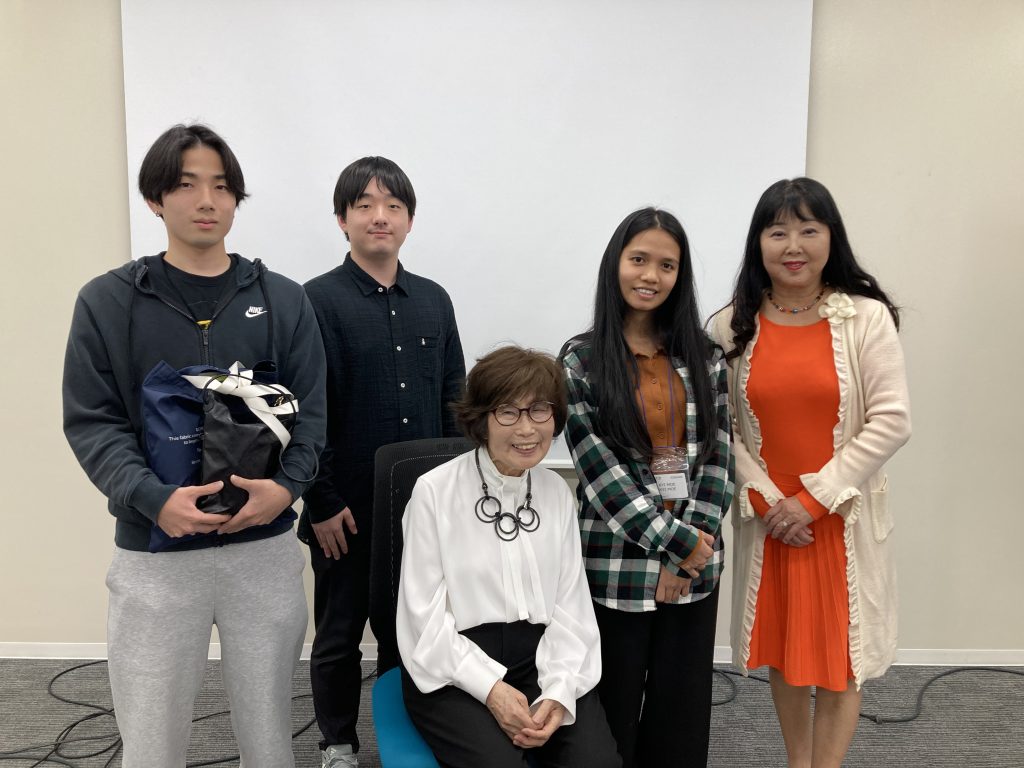
On May 6, 2026, As part of IEP class (Professor Yuko Uesugi ), we invited Ms. Keiko Ogura who is an A-bomb survivor and internationally recognized storyteller to give a special lecture. This was the fourth time Ms. Ogura has visited our university. Under the title “The Beginning and End of War as I Lived It: Radio and School Were My Entire World,” she spoke about her experiences in English as an eight-year-old survivor of the atomic bombing of Hiroshima, her later journey as an interpreter, and her lifelong commitment to nuclear disarmament. Her testimony offered a powerful and deeply moving message for the next generation.
Experiencing the Atomic Bomb at Age Eight
Ms. Ogura was eight years old when the atomic bomb was dropped on Hiroshima on August 6, 1945. Although her home was located away from the city center, she saw a blinding flash and was knocked unconscious by the blast.
She had previously attended an elementary school located within one kilometer of the hypocenter. Had she not transferred school or had her father not insisted she stay home that morning—she likely would not have survived.
When she regained consciousness, the surroundings were dark. Guided by her younger brother’s cries, she made her way home. The next morning, the city lay in complete devastation. She recalled seeing a thatched farmhouse near her home spontaneously ignite from the bomb’s intense heat rays. Even in areas far from the hypocenter, radioactive “black rain” fell, causing long-term health problems for many residents.
Her father spent the day after the bombing cremating more than 700 victims in an open field near their home.
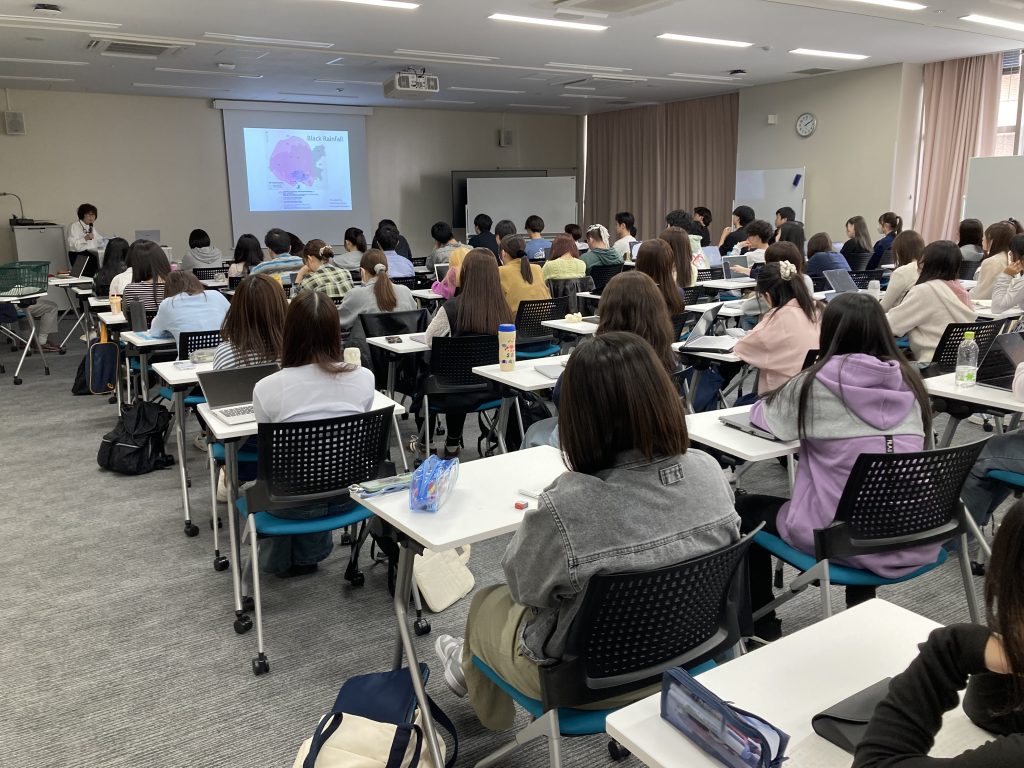
Ms. Keiko Ogura leads a classroom lesson①/Eikei University of Hiroshima
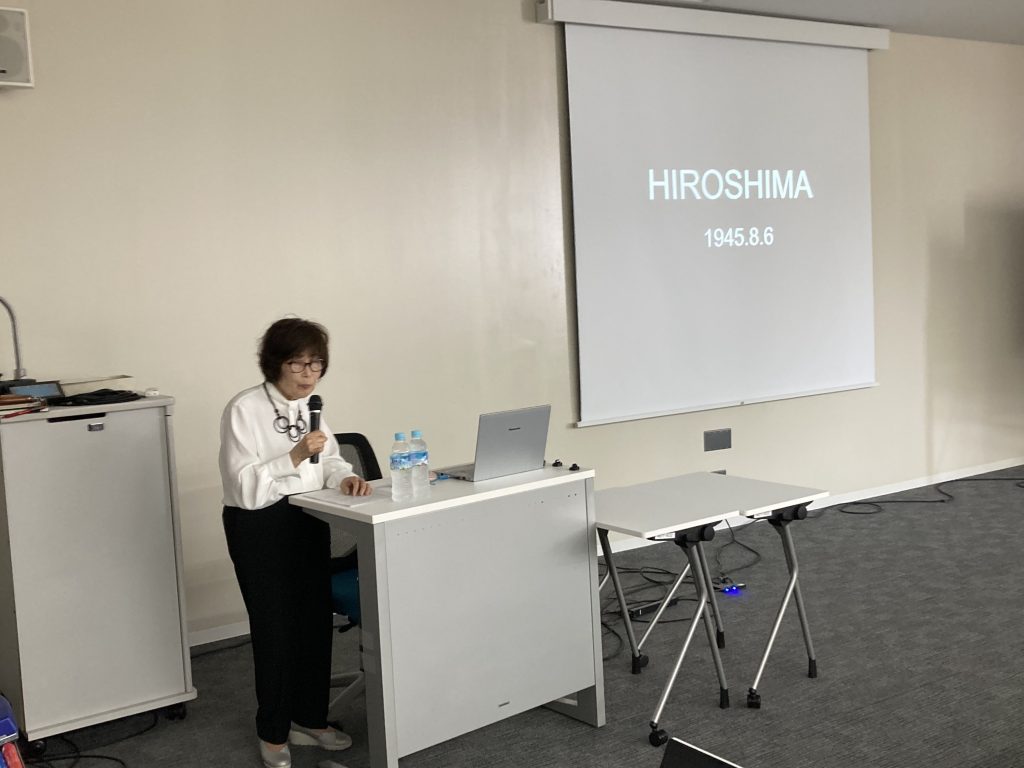
Ms. Keiko Ogura leads a classroom lesson②/Eikei University of Hiroshima
Devastation Near the Hypocenter
In the city center, many students mobilized for building demolition work were killed instantly. At her brother’s school, approximately 300 younger students and all first-year students perished.
Her brother saw something dropped from a B-29 bomber but avoided blindness because he did not look directly at the flash.
Survivors fleeing the hypocenter walked toward Hiroshima Station with their facial skin peeling off, appearing like “ghosts,” she recalled. Many people trapped under collapsed buildings cried out for help, but rescuers were unable to save them—leaving survivors with deep, lifelong guilt.
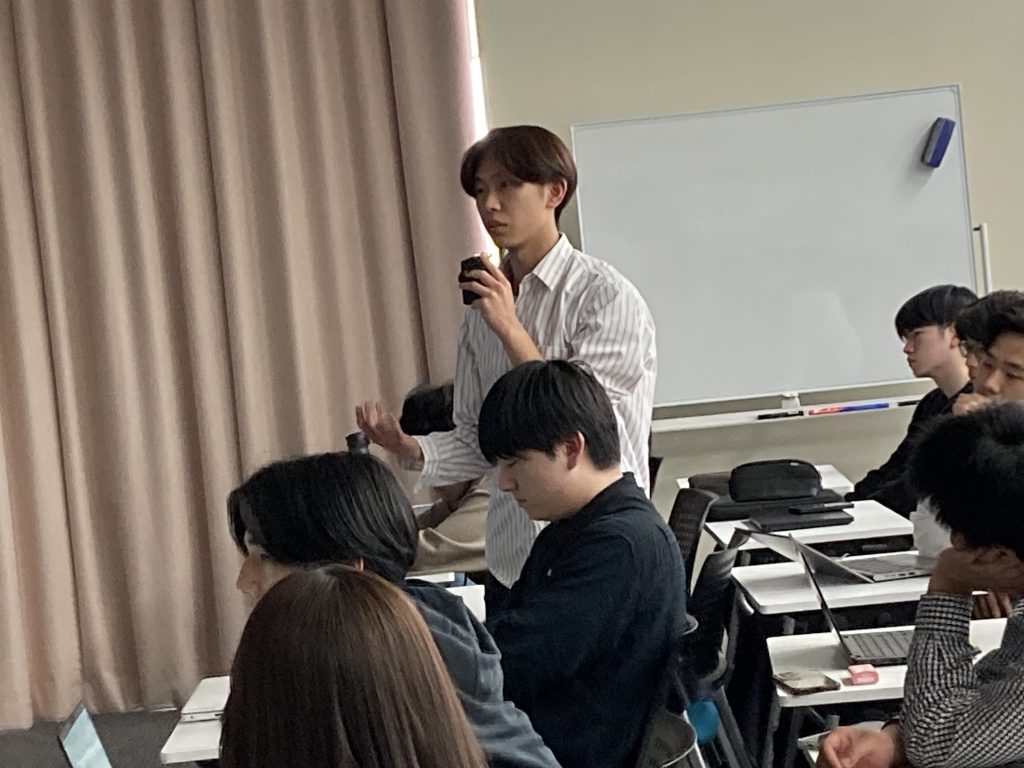
Students asked a lot of question①
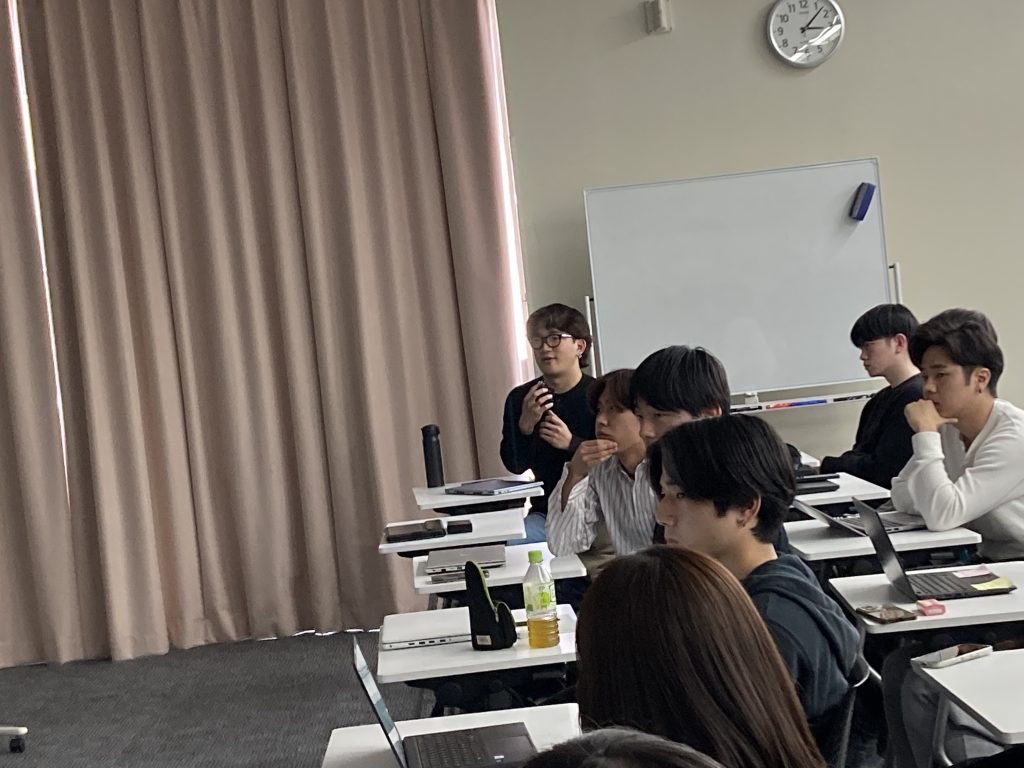
Students asked a lot of question②
Beginning a Career as an Interpreter
Until age 41, Ms. Ogura was a full-time homemaker. After her husband, who had twice served as Director of the Hiroshima Peace Memorial Museum, passed away suddenly, she was asked by Robert Jungk, author of Children of the Ashes, to interpret for him. This marked her return to English after twenty years and the beginning of her career as an interpreter at age 42.
During her first assignment, she did not understand the term “nuclear power plant” and had to ask the audience for help. Determined to improve, she studied independently, reading multiple editions of John Hersey’s Hiroshima and expanding her vocabulary. She later taught English at the YMCA while continuing her work as an interpreter.
Encounters That Shaped Her Views on Nuclear Weapons
Ms. Ogura shared her encounters with the grandson of J. Robert Oppenheimer and the grandson of President Harry Truman. She admitted that she initially harbored resentment toward Truman’s grandson, questioning why the atomic bomb had been dropped on a city.
She also described meeting a scientist from the Los Alamos Laboratory who told her he felt responsible for discovering that an airburst would maximize destructive power. His words left a profound impact on her.
In the United States, she was once thanked by people who believed the atomic bomb had saved their lives. In recent years, however, many audience members have wept and apologized after hearing her testimony—an indication, she said, of how essential it is to understand the human reality of nuclear weapons.
The Silence and Suffering of Survivors
Many survivors, she explained, blame themselves more than the enemy, haunted by the belief that they failed to save others. Some refrained from speaking about their experiences for fifty years out of fear of genetic effects on their children.
Although survivors continue to share the message that “such mistakes must never be repeated,” approximately 5,000 hibakusha pass away each year. With the number of living witnesses rapidly declining, Ms. Ogura, now 88, emphasized that continuing to speak is the only contribution she can still make.
Engaged Dialogue with Students and Passing the Baton
At the end of the lecture, students asked numerous thoughtful questions, and Ms. Ogura responded to each with sincerity and care. Even after the session concluded, students gathered around her, eager to continue the conversation.
Ms. Ogura expressed her admiration for our students’ intellectual curiosity and passion. As a host of this event, We felt the baton had indeed been passed to the next generation.
A Message for the Next Generation
Ms. Ogura concluded with several key messages for young people:
- The power of imagination and dialogue
Imagine the perspective of others, listen with warmth, and begin conversations within your own circles. Cooperation across borders is essential. - Be active citizens
Do not leave decisions solely to leaders. Oppose war, influence those around you, and recognize the vital role of education and media. - The essence of communication
Strive to convey feelings and nuances across languages while seeking to understand the background of others. - Believe in individual power
Even a single drop of water can join others to form a vast ocean. Collective action begins with individuals. - The meaning of peace
Peace begins with inner calm. Ultimately, it means recognizing that all people on Earth live together beyond borders.