
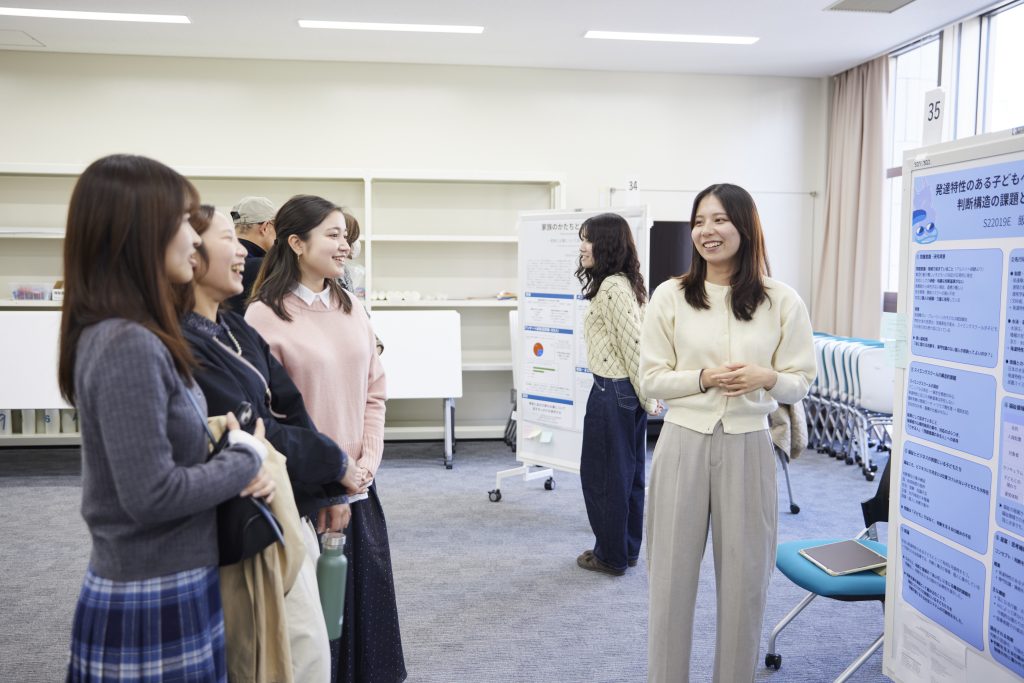
| Title | Challenges in Decision-Making Structures and Potential Support Strategies in Swimming Instruction for Children with Developmental Characteristics |
| Presenter’s Name | IIDA Natsu |
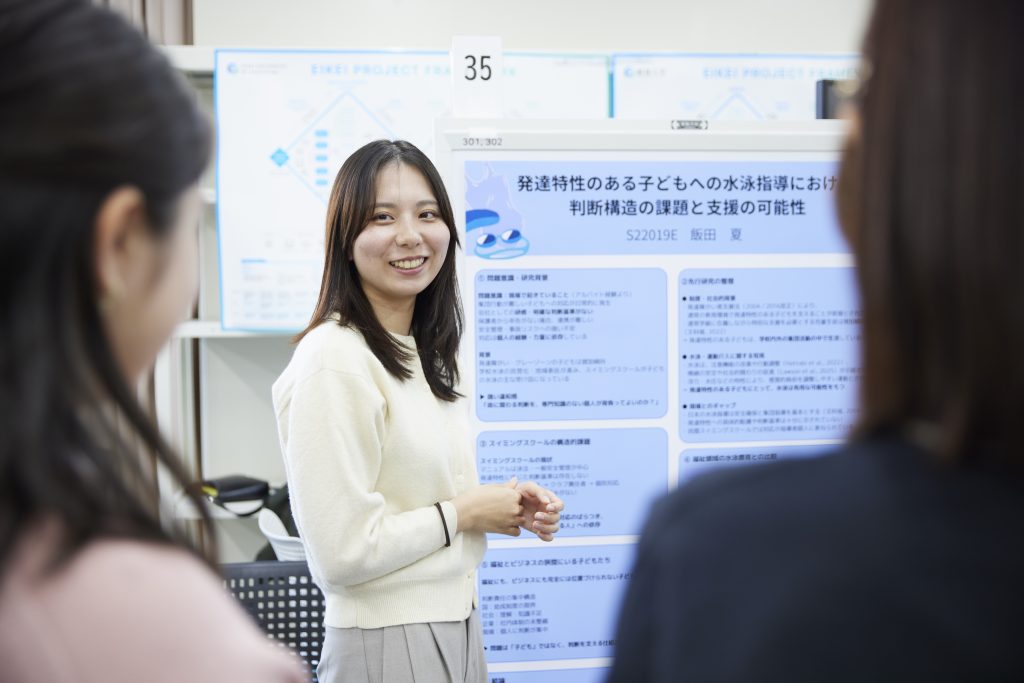
A Sense of Discomfort in Swimming Instruction as a Starting Point for Reexamining Structural Issues in Society
Through her part-time job at a swimming school, she began to feel a sense of discomfort with the reality that instructors were routinely expected to respond to children who struggled with group activities, as well as children with developmental disabilities or those in the gray zone. In situations where safety can be a matter of life and death, there are clear limits to relying on individual instructors—who often lack specialized knowledge in therapeutic care—to make critical decisions on their own.
To address this, she developed Sotto Swim, a cognitive support tool designed to assist instructors in their decision-making. The tool creates a database of behaviors and anxieties observed in children with developmental characteristics and uses AI to suggest appropriate ways of speaking and interacting with them. She implemented the tool at her part-time workplace, which allowed her to resolve the very challenges in instruction that she herself had struggled with—the core objective of her project.
As she progressed with her research, she also discovered that in the fields of child welfare and developmental support, every layer—national policy, society, companies, and frontline settings—faces significant issues, and that systems to support decision-making are lacking. The Degree Project became an opportunity to both visualize the structural challenges within welfare and developmental support sectors and recognize that her own everyday worries and questions were inherently connected to broader social systems.
| Title | Hiroshima Inbound Tourism Consumption Enhancement Project |
| Presenter’s Name | HAYASHI Tomoya |
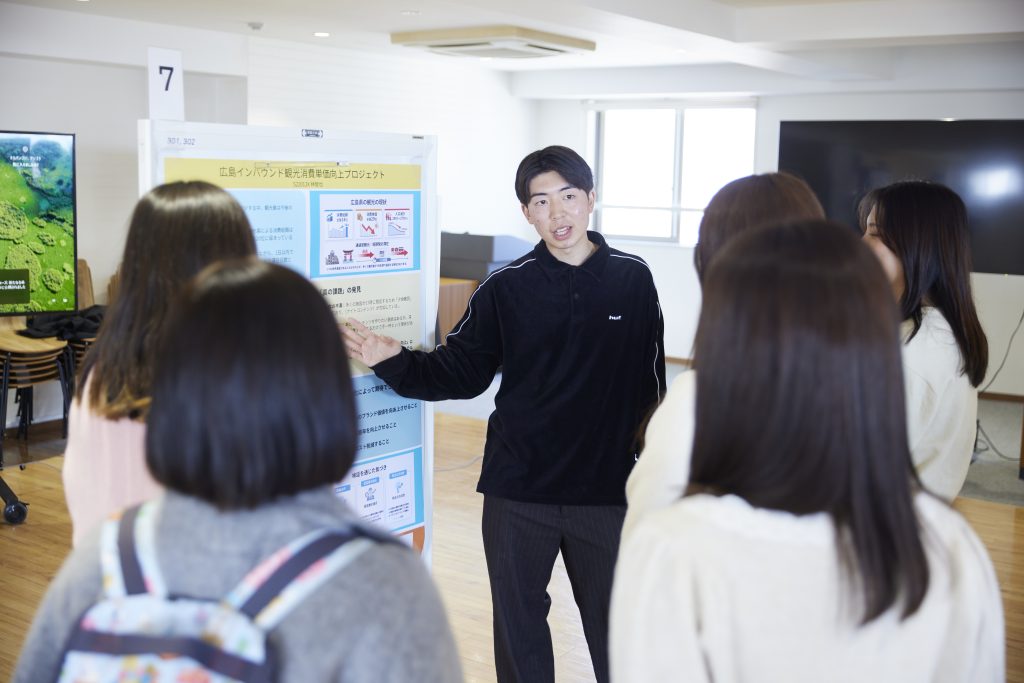
The Underlying Challenges in the “Workplace Reality” Behind Hiroshima’s Pass-Through Tourism
Although Hiroshima ranks 14th nationwide in total spending by inbound tourists, the per-capita spending remains only 20th. Viewing the prevalence of pass-through tourism as a major issue, this project explored strategies to increase inbound tourist spending in Hiroshima. Through interviews with international tourists and surveys conducted at inns in Miyajima, it became clear that before developing new tourism programs, improving working conditions and strengthening recruitment capabilities in the field were essential.
Based on these findings, a recruitment branding strategy utilizing social media was proposed to Miyajima Seaside Hotel. While the effectiveness of the SNS strategy was acknowledged, new concerns emerged—such as the unclear cost-effectiveness and the increased workload for staff—highlighting the importance of incorporating voices from those working on the ground.
Through this project, the student developed both the logical thinking skills necessary to identify core issues by clarifying gaps between hypotheses and reality, and the practical ability to visit sites and engage in repeated dialogue. This experience became a valuable foundation for their future professional life.
| Title | Reexamining the Value of Print Books ~New Ways of Engaging with Print Books through ZINE Culture~ |
| Presenter’s Name | HAMASAKI Nazuna |
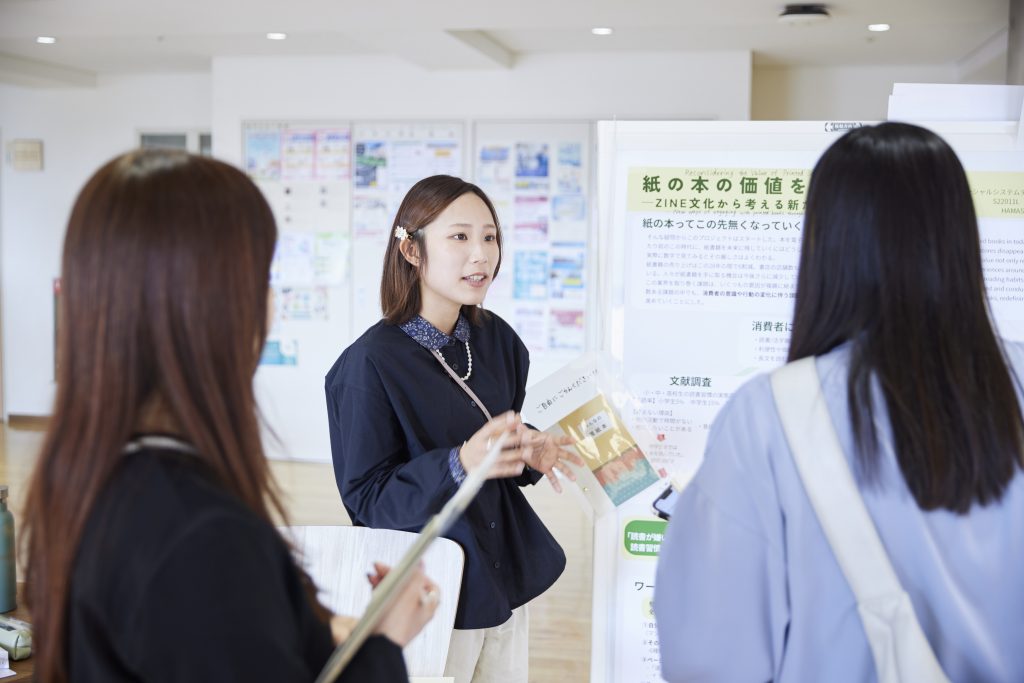
How ZINE-Making Workshops Inspire New Reading Experiences
The Degree Project began with a simple question: “Will printed books disappear in the future?” The decline in paper-book sales can be attributed to various factors, including more efficiency-oriented consumption habits and a growing preference for convenience and low prices. Among these, I focused on shifts in consumer awareness and behavior. To achieve the goal of “encouraging more people to engage with printed books,” I chose a practical, hands-on approach.
A questionnaire survey revealed that readers seek experiential value in reading—not only the act of reading itself, but also displaying, collecting, and sharing books. With this in mind, I conducted a ZINE-making workshop for university students who often struggle to maintain regular reading habits. Participants created their own small booklets using six different types of paper, each with distinct textures and thicknesses. By designing each page while paying attention to the qualities of the paper, they were able to experience firsthand the “joy of touching paper,” a unique appeal of printed books.
Although I faced many challenges while designing the workshop, the process of clearly defining the target audience and considering the most effective methods for solving the issue proved to be an invaluable learning experience.
| Title | Exploring the Relationships Among Fish, Nature, and People Through Fishing An Autoethnographic and Fieldwork-Based Study |
| Presenter’s Name | YAMAMOTO Tomoya |
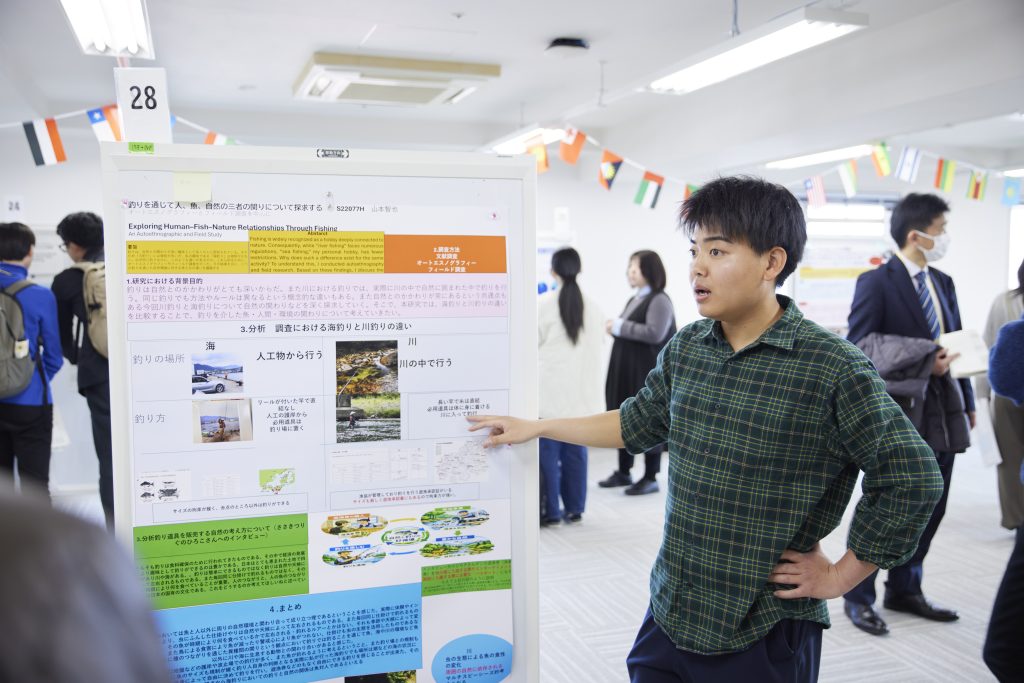
The differences between river fishing and sea fishing taught me how to relate to nature
While enjoying my hobby of fishing, I became curious about the differences in regulations between river fishing and sea fishing. River fishing often requires a recreational fishing permit, and there are stricter size restrictions on fish. Wondering why these differences existed, I chose this topic for my Degree Project. In addition to a literature review, I used autoethnography to reflect on my own experiences and conducted field research to examine how people engage with nature differently in these two types of fishing.
As a result, I found that river fishing relies much more heavily on the surrounding ecosystem and local environment compared to sea fishing. This dependency has led to the establishment of stricter regulations to protect these fragile natural systems. In interviews conducted at fishing tackle shops, I also learned that fishing is a culture supported by Japan’s four seasons, its social environment, and shared moral values.
I came to realize that regulations are not meant to take away the enjoyment of fishing, but rather to provide a system that allows us to continue protecting nature. Moving forward, I want to remain mindful of my responsibility to the environment, deepen my understanding, and continue engaging with fishing in a thoughtful way. I also hope to raise awareness about the importance of good fishing manners.
| Title | Applying Vertical Hydroponic in Urban balcony Trials for Cost-effective Stem Rot Prevention for Sustainable Hydroponic Balcony |
| Presenter’s Name | TRAN Minh Sang |
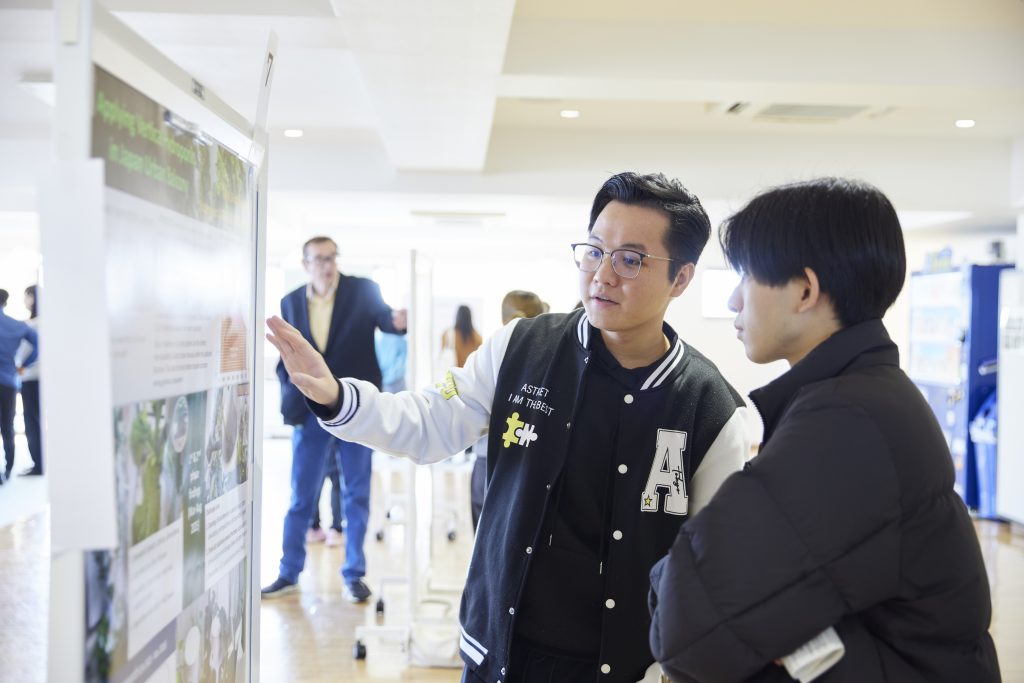
A balcony gardening challenge born from a sense of urgency about food issues
During my third-year internship, I learned about social issues such as Japan’s declining food self-sufficiency rate and its rapidly aging society. Wanting to contribute to solving these challenges, I examined the feasibility of introducing tower-style hydroponic cultivation on a balcony. Although problems such as wilting and root rot occurred multiple times during the experiment, I improved nutrient management and introduced silicon dioxide, ultimately achieving stable cultivation. The results also showed that hydroponics uses significantly less water than soil-based cultivation and reduces labor, making it an approach that can be easily adopted by anyone in daily life. On the other hand, low reproducibility and the lack of clear manuals remain challenges for broader adoption.
Although Eikei University of Hiroshima is often perceived as a humanities-focused institution, students are free to choose their project themes. Through this project, I incorporated a scientific approach to address social issues and was able to deepen my knowledge of science, biology, and chemistry. While repeated trials often failed and the process was at times discouraging, I ultimately developed the perseverance to see the project through to completion.
| Title | The Effects of Diary Writing on the Author’s Emotions An Analysis Using the Shortened Version of the Multi-Dimensional Emotion State Scale and Open-Ended Responses |
| Presenter’s Name | MAEDA Shuto |
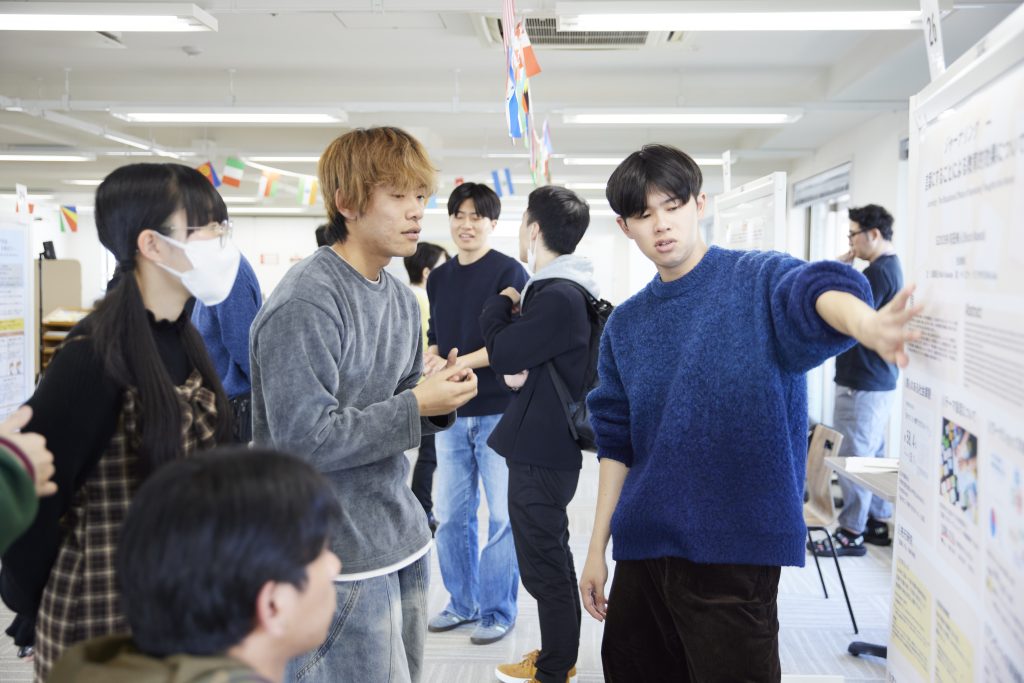
What Constitutes Effective Self‑Dialogue? From Research to Community Implementation
Prompted by a friend’s experience with school refusal, I began to wonder what I could do to address the growing social issue of increasing absenteeism among students. Drawing on my experience facilitating a “putting feelings into words” workshop since my second year at university, I focused on the emotional changes that occur through the act of writing. For my Degree Project, I hypothesized that journaling, a method of self-dialogue, might be effective for supporting children’s mental well‑being, and conducted an investigation to test this idea.
In an experiment that divided participants into a “writing group” and a “non-writing group,” the results suggested that writing helped prevent a decline in positive emotions. However, challenges remained in terms of achieving statistical significance. After graduation, I plan to continue researching the educational effects of expressing thoughts through writing, and—working as a member of Etajima City’s Community Revitalization Team—develop ongoing experiential programs. I hope to help create community spaces where young people, including those struggling with school attendance or with liking themselves, can feel safe to express their thoughts in words.
・Degree Project Case Introduction – EIKEI UNIVERSITY OF HIROSHIMA(Japan)
If you are a member of the media interested in Degree Project, please feel free to contact our Academic Planning Office.
| Contact Us | Academic Planning Office, Eikei University of Hiroshima (HIURA・TAJI) TEL:080-9208-0466 E-mail:publicrelations@eikei.ac.jp |