
“Degree Project”: The culmination of learning at Eikei University of Hiroshima
On Saturday, February 21, we held a public presentation for the “Degree Project” .
After the Second Reporting Session in November, the students compiled and submitted their reports based on the feedback they received from external evaluators and others.
A total of 83 students presented posters, and additionally, 6 students gave oral presentations.
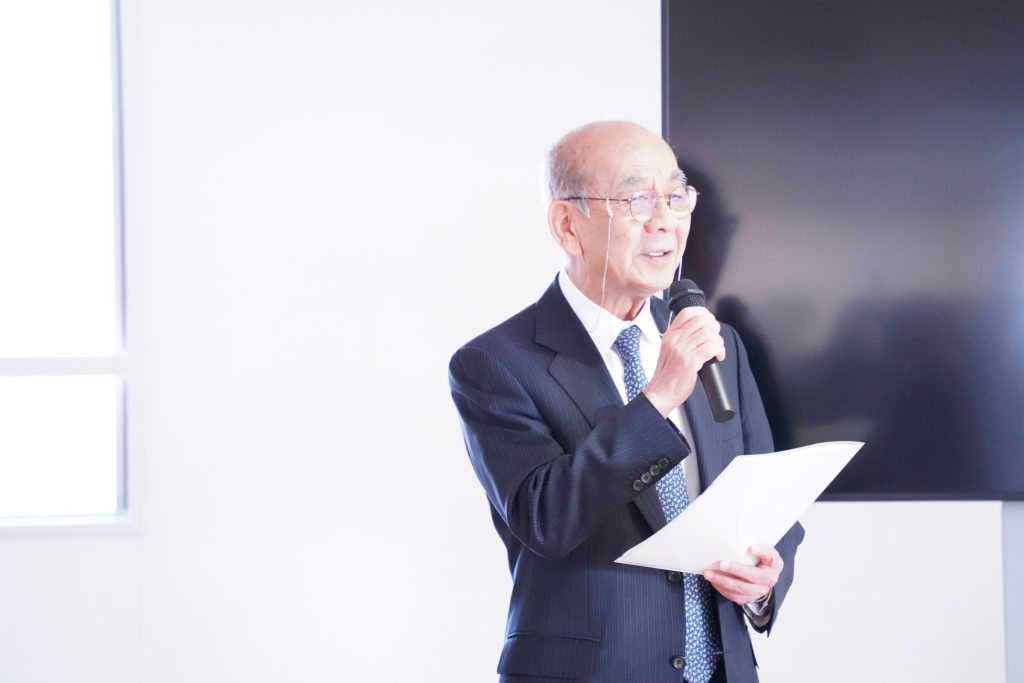
Opening Address (President ARINOBU)
An opening address was delivered by President ARINOBU Mutsuhiro.
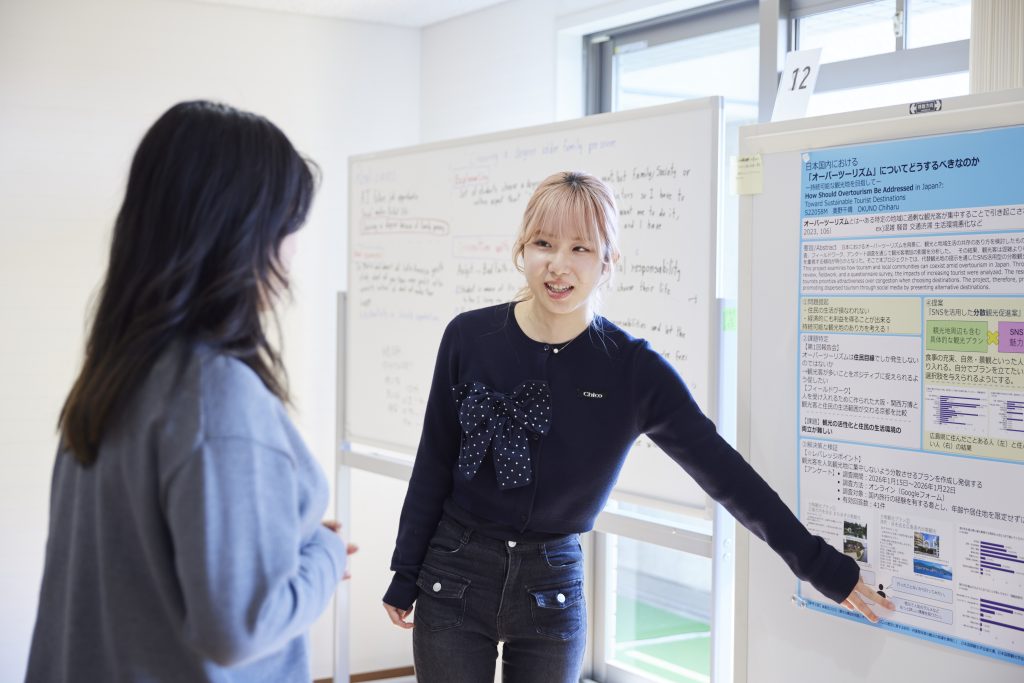
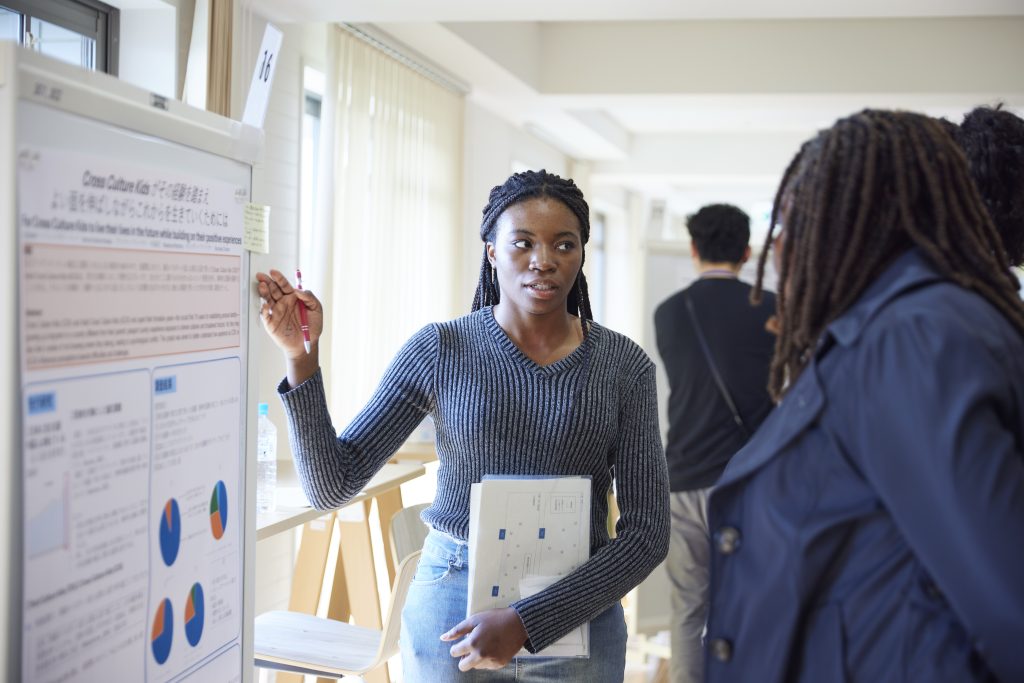
Poster Presentation
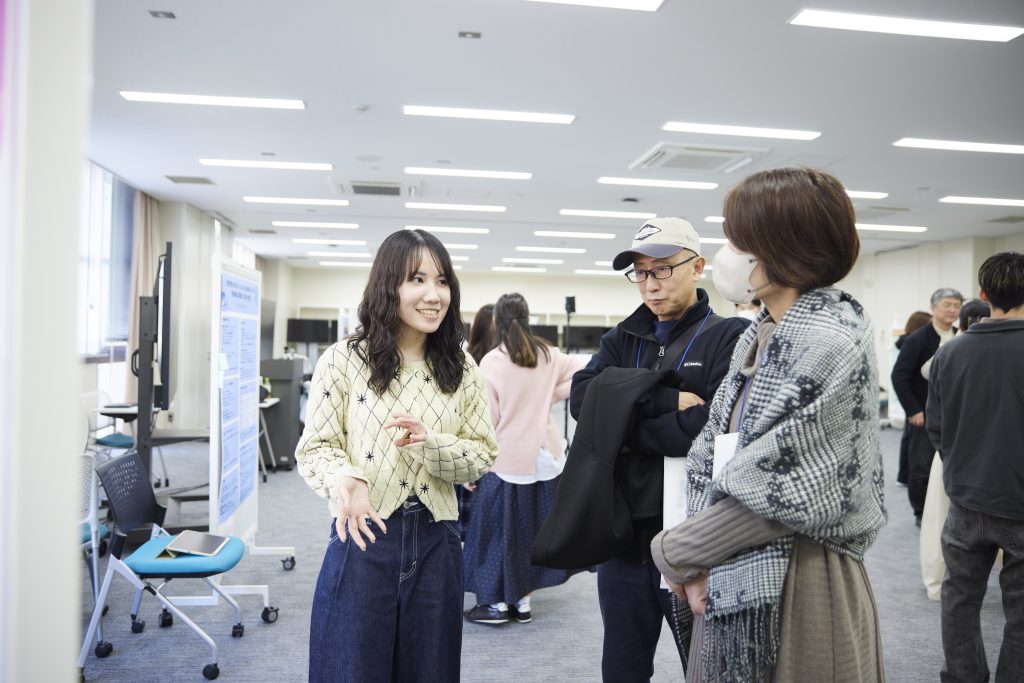
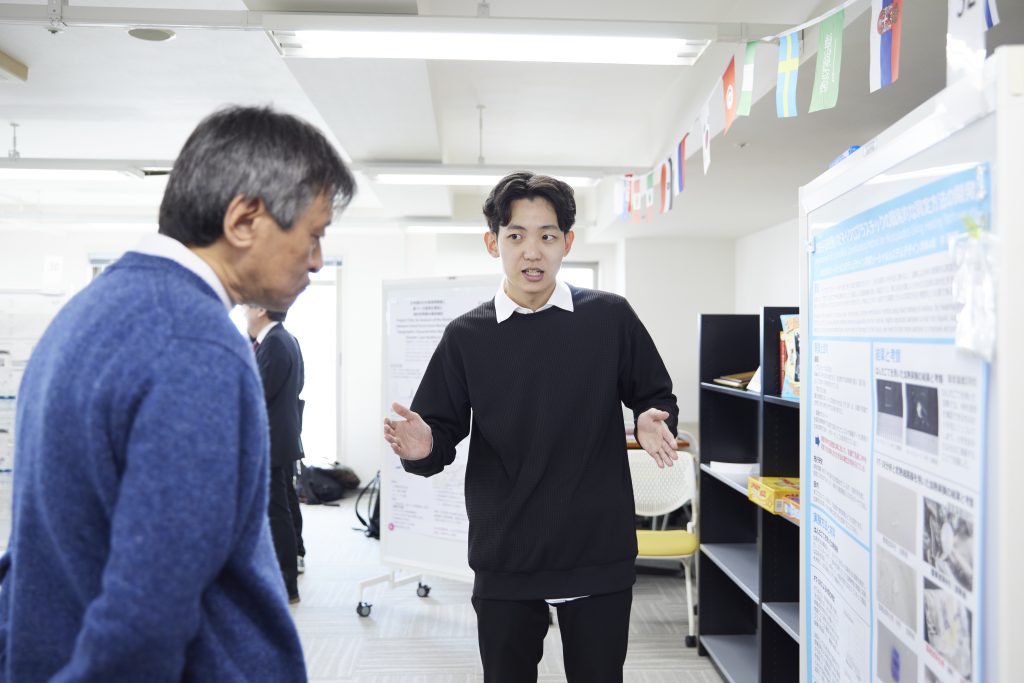
Students were divided into seven groups and conducted poster presentations on the 15th, 14th, and 3rd floors.
Oral Presentation
6 students gave 15-minute presentations.
| Title | Communicating Local and Japanese Culture through Craft Sake |
| Presenter’s Name | UCHIDA Shiori |
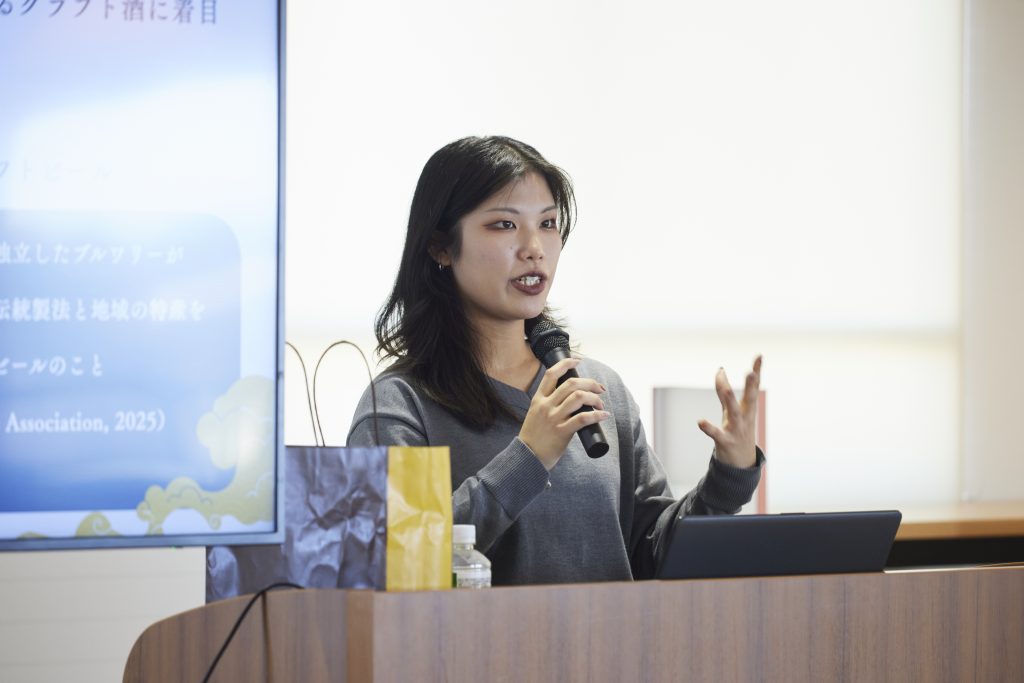
UCHIDA Shiori explored creating opportunities to rediscover Japanese culture through craft sake. Through her part-time job experience at a restaurant, she realized that when conveying Japanese culture to people from overseas, she herself did not fully understand it. This led her to focus on how Japanese people understand their own culture.
During her third-year internship, she encountered craft sake and began planning ways to create community-level opportunities for cultural understanding through it. As part of this initiative, she organized a tasting workshop where participants could share the stories and backgrounds behind craft sake.
She concluded that “craft sake cannot be summed up in a single phrase like ‘This is Japan,’ but rather serves as a portable cultural medium that allows people to rediscover that ‘this, too, is Japan.’” Looking ahead, she expressed her desire to continue creating opportunities for people in Hiroshima to casually experience craft sake and to expand interest in culture after graduation.
| Title | Liberation from Numerical Management |
| Presenter’s Name | KOHARA Takamasa |
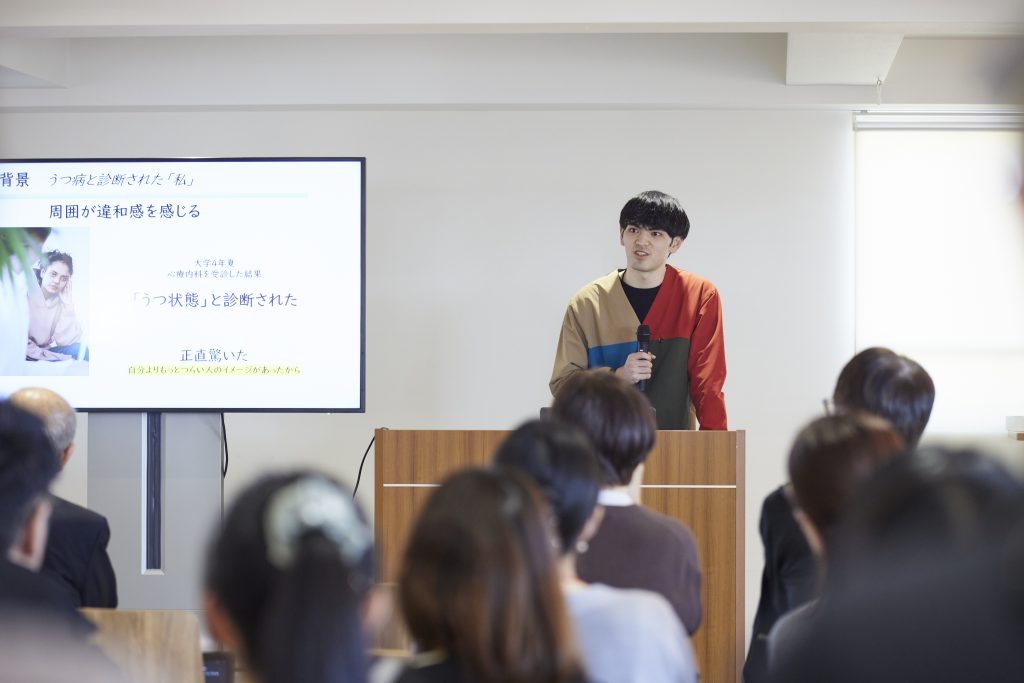
KOHARA Takamasa, who had experienced depression, reflected on how he became dependent on “numerical health management,” which he had started in search of reassurance. Based on this experience, he explored ways to “face vague anxieties without being bound by numbers.” While monitoring his health through numerical data provided temporary relief, he found that it also created new stress as he struggled with the gap between his actual values and the ideal ones.
He then turned his attention to the gameplay of mahjong, where numbers and uncertainty coexist, and analyzed its thought processes. Drawing on previous research, he redefined three aspects of thinking in mahjong: digital thinking based on probabilities and statistics; occult thinking based on uncertain factors such as luck and flow; and analog thinking based on personal experience that reveals potential possibilities. He concluded that analog thinking—particularly the mindset of finding new possibilities such as “It might have turned out differently if I had done this,” without despairing over unreasonable outcomes—could contribute to living more comfortably.
At the end of his presentation, he remarked, “I hope that my juniors, especially when they feel mentally exhausted, will look toward possibilities and move forward positively.” His words left a strong impression.
| Title | Implementation of Renewable Energies in Mexico |
| Presenter’s Name | BUSTAMANTE ANTONIO Martin Rogelio |
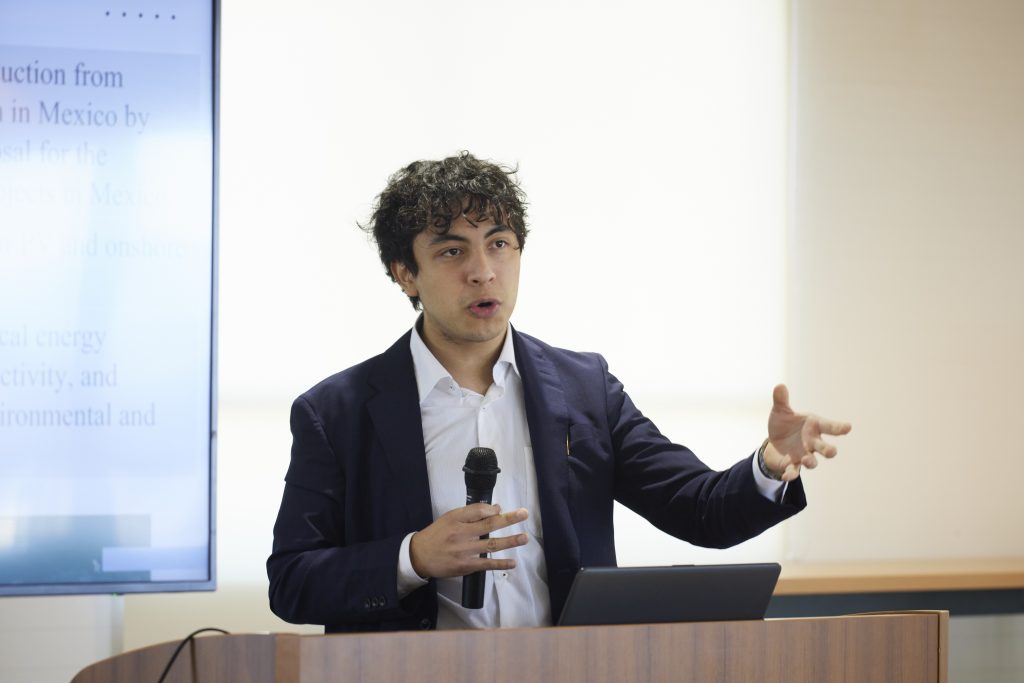
BUSTAMANTE ANTONIO Martin Rogelio, who came to Japan to pursue higher education, was struck by the sight of vast fields of solar panels from the airplane window. In his home country of Mexico, the spread of renewable energy has made little progress, and this experience led him to believe that there might be lessons to learn from Japan’s efforts. Motivated by this, he chose to work on policy proposals for his Degree Project.
Believing that the widespread introduction of renewable energy in Mexico requires demonstrating not only environmental benefits but also financial advantages, he calculated the potential cost savings compared with existing power generation methods. He also examined international case studies and considered which regional conditions would be most suitable for implementation.
Through this research, he concluded that simply introducing new technologies would not be enough to ensure success. Instead, he argued in his presentation that the key lies in designing policies that focus on reducing investment risks.
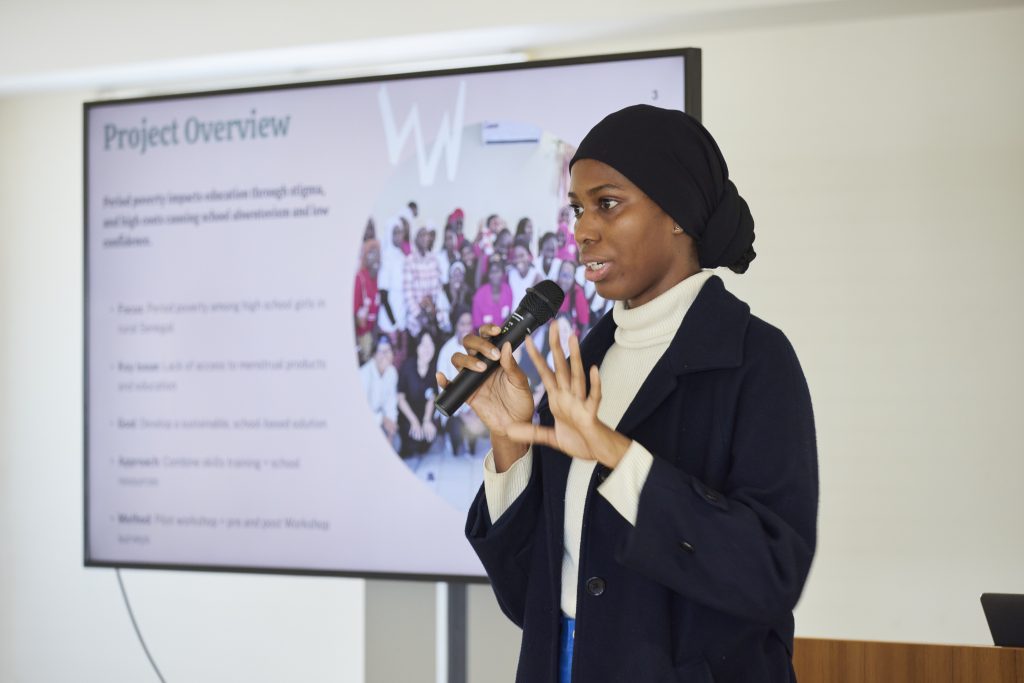
| Title | ADDRESSING PERIOD POVERTY IN SENEGAL Integrating Skills Training and School Resources for Menstrual Health Sustainability |
| Presenter’s Name | BA Khadidiatou |
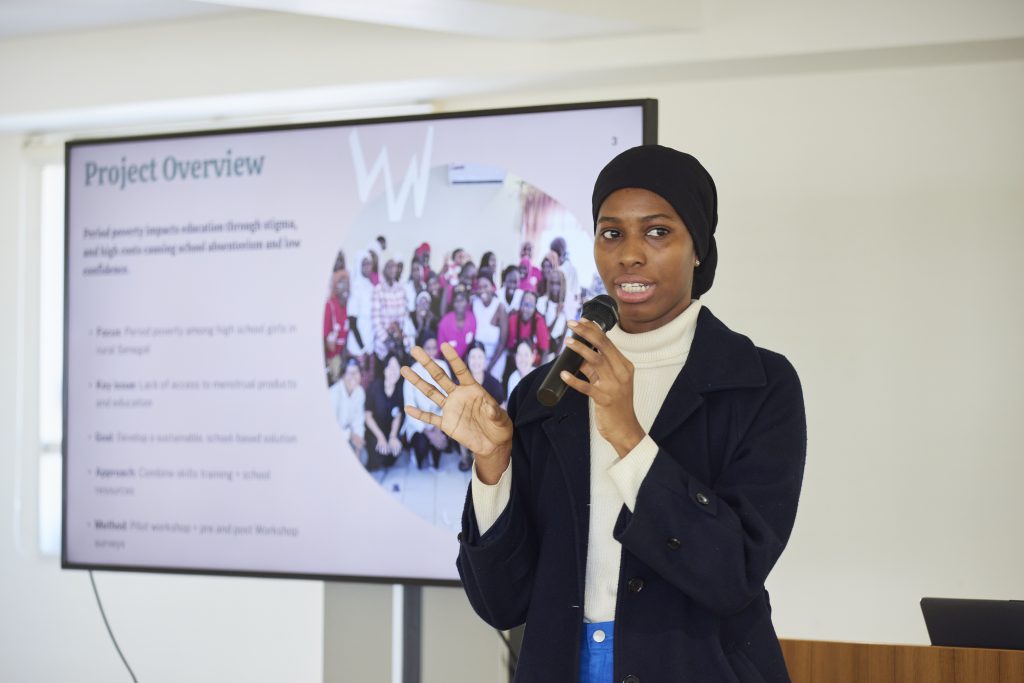
BA Khadidiatou addressed the serious issue of period poverty in her home country of Senegal. Because menstrual products are imported, they are expensive and not easily accessible for local female students. Many girls are forced to miss school during their periods, and BA herself had felt a strong sense of urgency about this issue since her high school days.
Believing that simply distributing menstrual products would not lead to a fundamental solution, she proposed a system in which reusable pads can be made locally. In a workshop she held in Senegal, she taught participants how to make pads using materials available in the community, as well as how to manage hygiene properly. Her efforts have been positively received by the Ministry of Health and the Maternal and Child Health Department in Senegal.
Looking ahead, she expressed her strong hope to go beyond workshops and eventually establish facilities within schools equipped with production machines, creating an environment where girls can make their own pads whenever they need them.
| Title | What is intercultural communication education that aims to understand deep culture? |
| Presenter’s Name | OKANO Honoka |
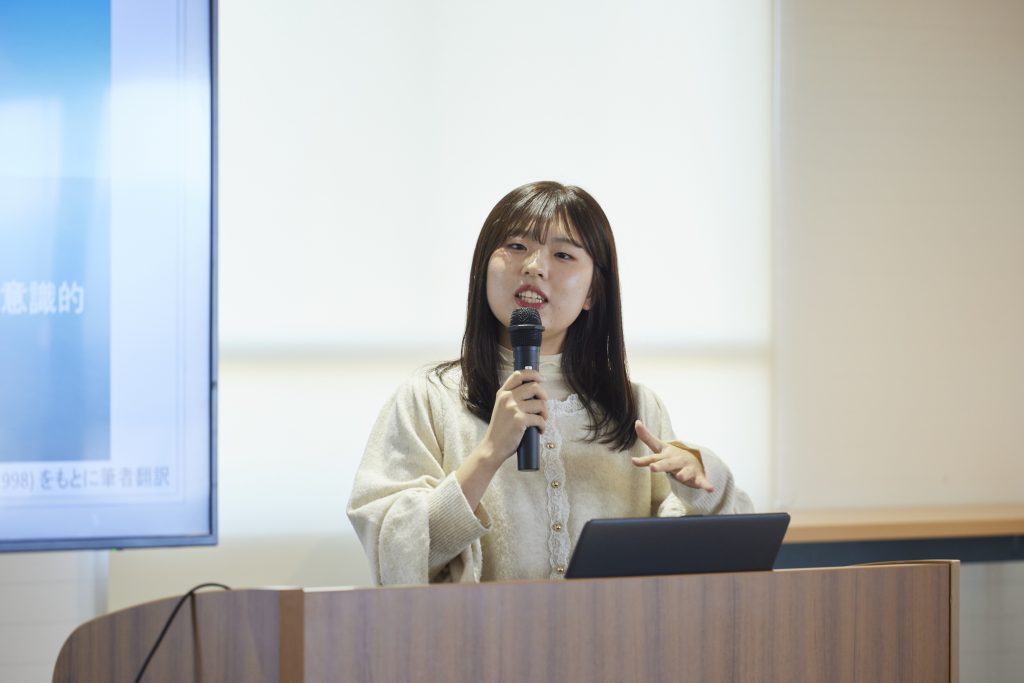
OKANO Honoka, inspired by her experiences studying abroad, analyzed how intercultural communication education can be improved. She felt that effective intercultural communication requires understanding not only surface-level culture—such as manners and rules—but also deep culture, including the background and values from which those manners emerge.
She identified several issues in traditional intercultural education. To address these challenges, she redesigned an existing intercultural understanding game and conducted a workshop in which participants researched their own country’s manners and the underlying values, then created “manner cards.” Through interaction and reflection, participants showed increased awareness of their own culture, greater interest in other cultures, a shift toward more respectful attitudes, and emotional responses such as feelings of joy or anxiety. At the same time, she noted limitations such as the short duration of the workshop and the lack of long-term evaluation. She concluded that, moving forward, it will be necessary to refine participant composition and timing, and to conduct ongoing evaluations in order to establish more practical and effective intercultural communication education.
| Title | Exploring how English medium instruction (EMI) actually works in mixed-proficiency classes: A case study at Eikei University of Hiroshima |
| Presenter’s Name | YOSHIMOTO Koki |
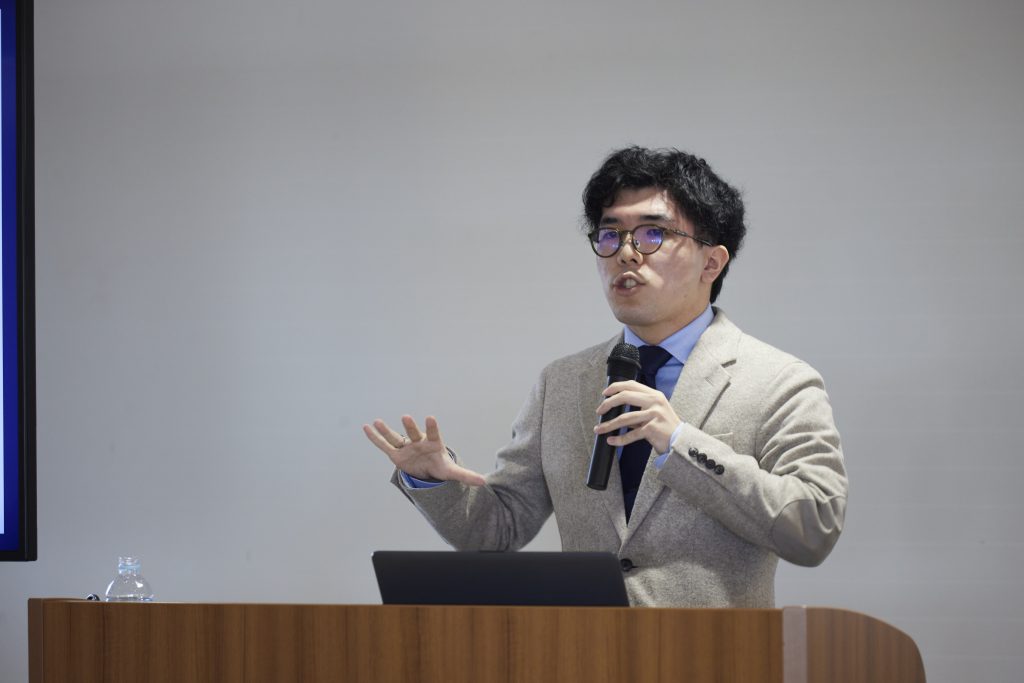
YOSHIMOTO Koki investigated the learning effects of EMI (English-Medium Instruction) in environments like those at Eikei University of Hiroshima, where students’ English proficiency levels vary. Through interviews with students who had taken EMI courses and with the instructors who taught them, he found that the learning outcomes of EMI and Japanese-medium courses were generally comparable. At the same time, EMI tended to facilitate more active intercultural dialogue, and discussions on ethical issues—such as social stratification and human rights discrimination—were observed to become more multifaceted and in-depth compared with those in Japanese-medium classes.
Furthermore, he pointed out that the quality of learning is influenced not by English proficiency itself, but by students’ willingness to engage proactively in the course—by making use of support from student assistants, collaborating with peers, and taking advantage of opportunities for self-directed learning.
During the Q&A session, he received a question regarding comparisons with instruction conducted in other languages. In response, he explained that English is the most widely shared international language, and therefore, compared with classes taught in other languages, EMI may provide opportunities for a larger number of students to participate actively.
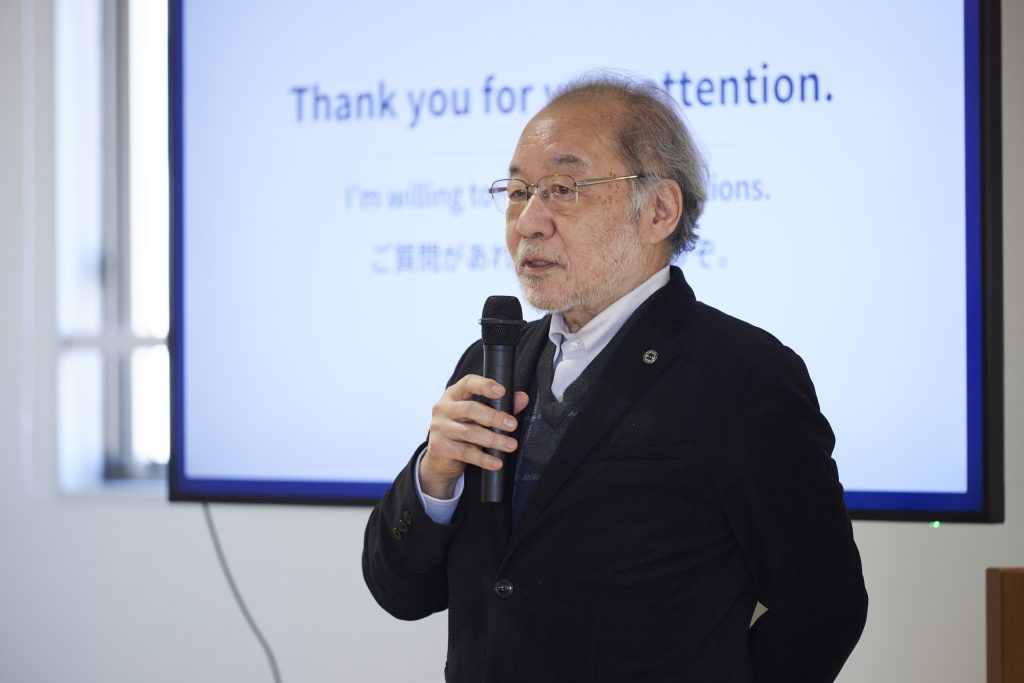
Closing Address (Dean ISHIKAWA )
A closing address was delivered by Dean ISHIKAWA Masanobu, Faculty of Social System Design.
・Degree Project Case Introduction – EIKEI UNIVERSITY OF HIROSHIMA(Japan)
If you are a member of the media interested in Degree Project, please feel free to contact our Academic Planning Office.
| Contact Us | Academic Planning Office, Eikei University of Hiroshima (HIURA・TAJI) TEL:080-9208-0466 E-mail:publicrelations@eikei.ac.jp |