
About
Alumni

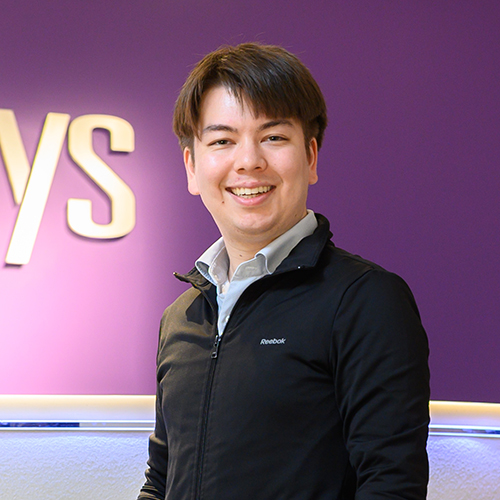
OGAWA Jonathan Kaisei
Nihon Synopsys G.K. March 2025 Graduation
Updated December 2025
Essential for Working with Diverse Teams!
A Graduate Thriving in the IT Industry Shares:
“What Does Global collaboration Learned at Eikei University of Hiroshima Really Mean?”
The first cohort graduated in March 2025 and is now active in various fields.
One of them, OGAWA Jonathan Kaisei, joined Nihon Synopsys G.K., the Japanese subsidiary of Synopsys, Inc. (headquartered in California, USA).
Working as a Solutions Sales Representative, Ogawa leads a busy professional life. We asked him about what he learned at university and the strengths that help him succeed in his current role.
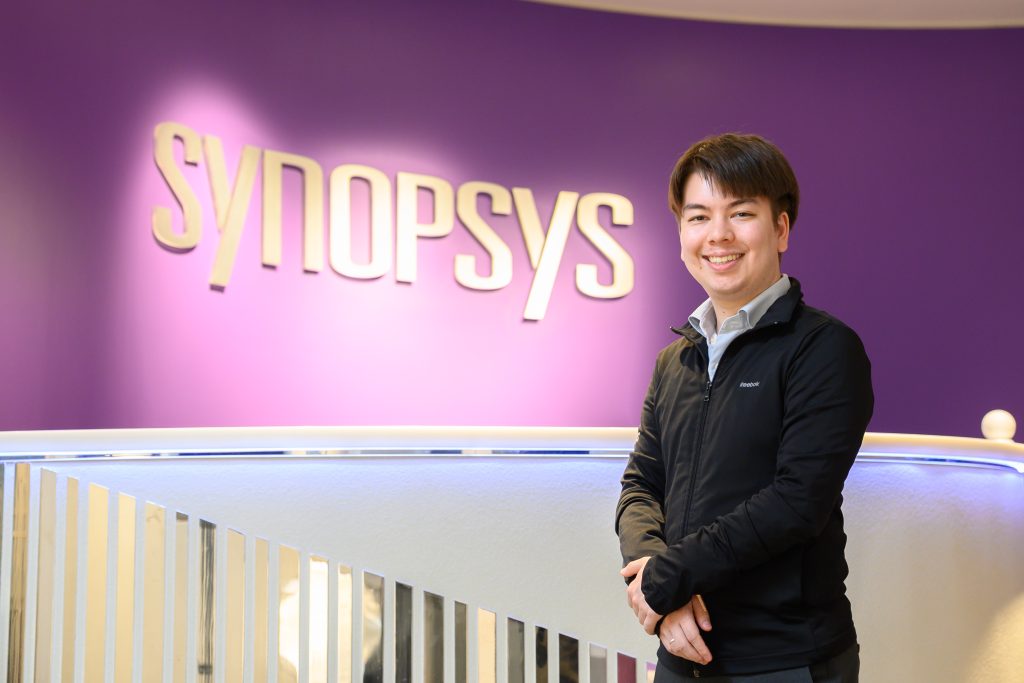
Through Project-Based Learning Exercises (PBL), I developed the ability to collaborate effectively.
—Among the five competencies you acquired at university, which one has become OGAWA-san’s particular strength?
We propose our in-house developed semiconductor IP products to clients such as semiconductor-related companies and electronics manufacturers. It’s not just about selling products; what matters is building long-term relationships, listening to their challenges, and offering solutions tailored to their needs.
This is where “Global collaboration” become essential. In our work, internal coordination is indispensable, and sometimes we also collaborate with offices around the world. Moreover, our clients’ companies employ people from diverse backgrounds. When working in teams with individuals who differ in race, religion, and ways of thinking, understanding cultural values and showing respect for others are crucial. That’s why “Global collaboration” in high demand.
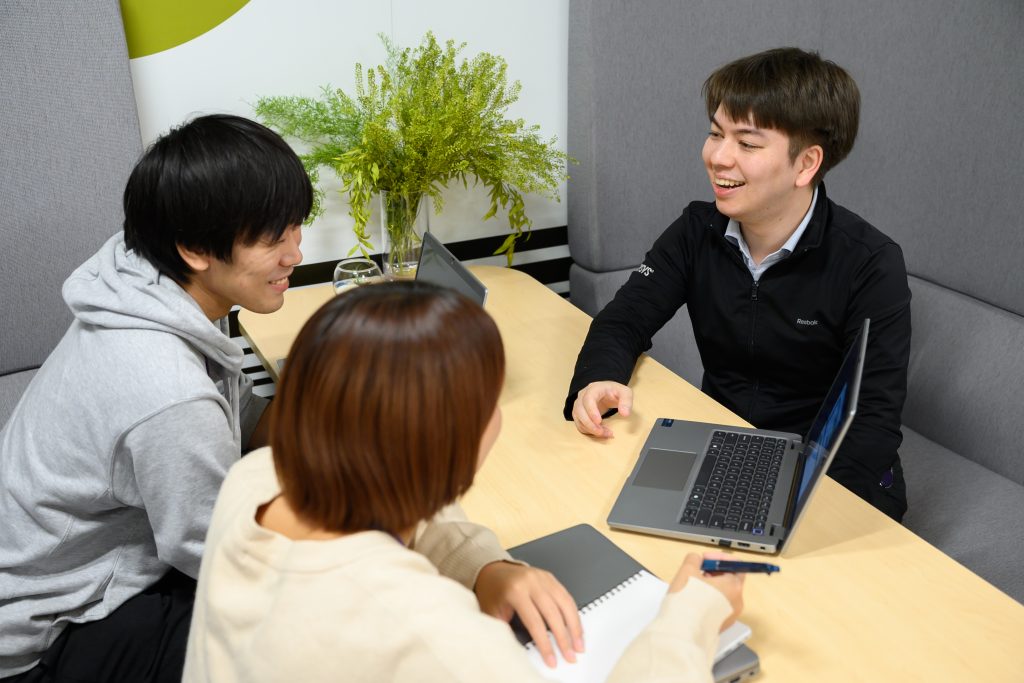
—How did you develop your “Global collaboration”?
At Eikei University of Hiroshima, every class required us to engage proactively— thinking deeply, speaking up, and taking action. Among these experiences, what left the strongest impression on me was Project-Based Learning (PBL). I have always been interested in environmental issues, so I worked on a project related to a global consumer goods company’s program for collecting used plastic containers. We explored questions such as: How can we encourage more people to participate? How can we create a system to reduce plastic waste and promote resource circulation? Through these activities, I collaborated with people both inside and outside the university, which helped me cultivate the ability to work effectively with others.
Another valuable experience was the Model United Nations role-play, where students represented countries from both developed nations and the Global South. It was a great opportunity to understand different perspectives and positions. In addition, many classes were conducted in English, which allowed me to improve my English proficiency—a skill I now use daily in my work for internal coordination and contract negotiations.
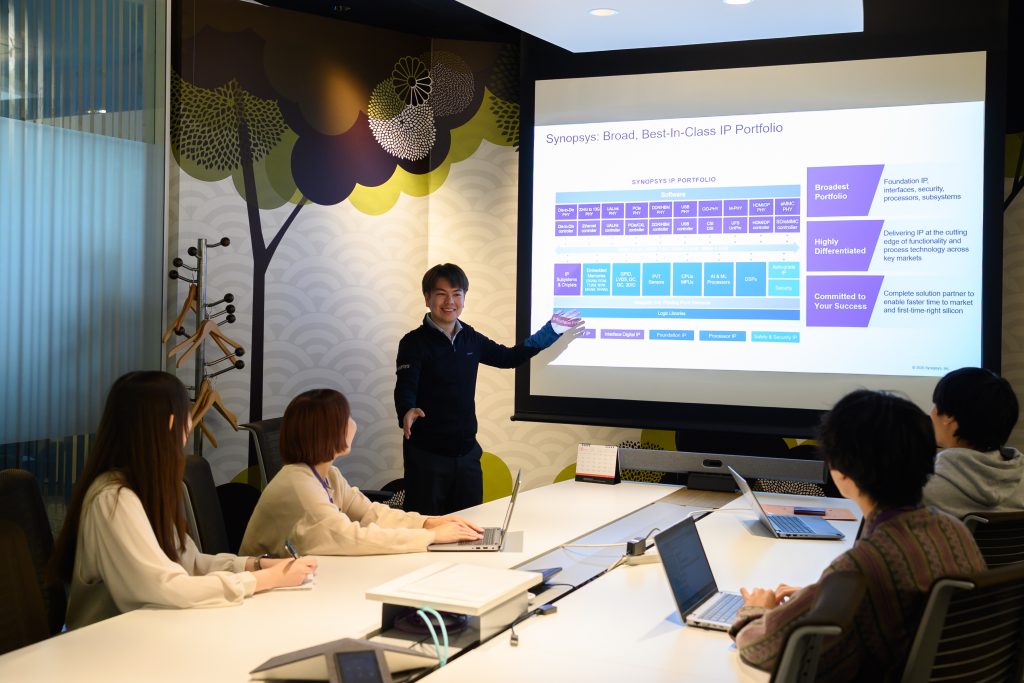
A Valuable Mindset Learned from Professors
—Has your perspective or way of thinking changed through what you learned at Eikei University of Hiroshima?
One phrase that the Dean often said, “See the forest while looking at the trees,” has become an important guiding principle for me whenever I tackle something.
I also remember the words of the professor who supervised my Degree Project: “Don’t rush to come up with a solution; what matters is identifying the fundamental problem or issue.” At that time, I was impatient and wanted a quick conclusion. But I learned that such an approach prevents you from seeing the essence of things.
These lessons are something I keep in mind even now in my work. To understand what our clients truly want and make accurate proposals, it’s essential to see the forest while looking at the trees. And to deliver the best solution, we need the attitude of not seeking easy answers but carefully discerning the core of the matter. I believe these words left such a deep impression on me because Eikei University of Hiroshima is a place where students are close to faculty and staff.
—What sparked your interest in the IT industry?
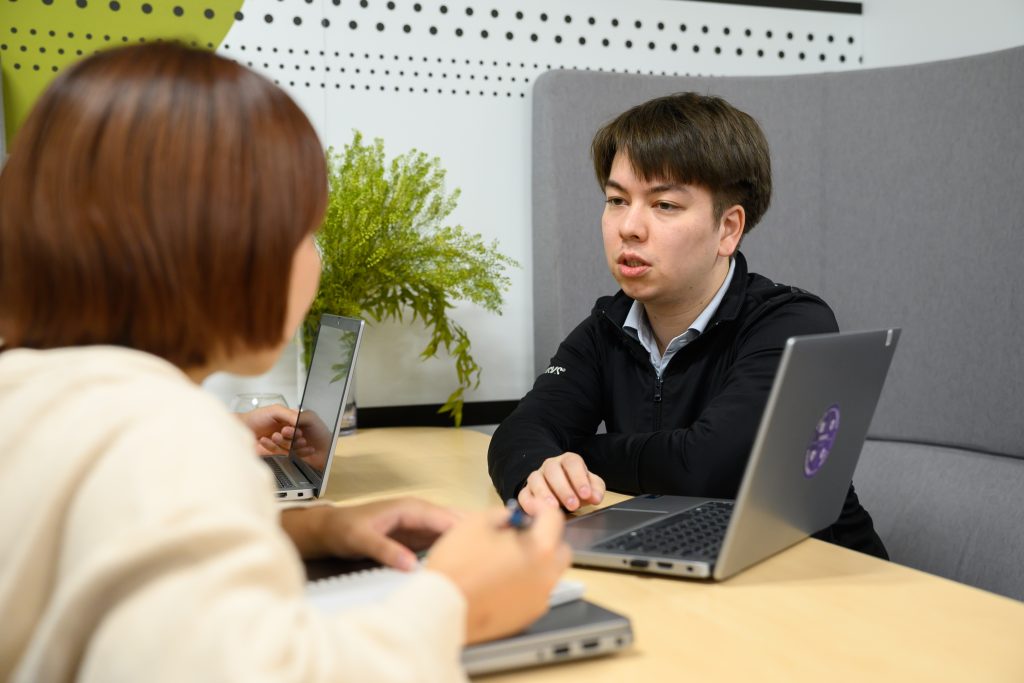
It all started with a university class where I learned programming. Through that experience, I realized that AI would soon spread explosively across society, and I became interested in the field that supports such cutting-edge technologies. However, rather than pursuing a technical role, I came to understand—through my interactions with faculty and staff both inside and outside of class—that I enjoy communicating with people. That’s why I decided that a sales position would suit me best.
—Finally, what would you say to someone who is unsure about which university to choose?
Instead of overthinking, I believe it’s okay to trust your instincts and choose based on your own inspiration. And if pursuing higher education doesn’t feel right at the moment, it’s never too late to try something different, like going abroad, before making that decision. I didn’t enter Eikei University of Hiroshima immediately myself—I had my own journey before coming here. The knowledge I gained, the new perspectives I discovered, and the days spent with peers from diverse countries and regions—all of these encounters at Eikei University of Hiroshima have brought a significant change to my life.
Comment from a Manager at Nihon Synopsys G.K.
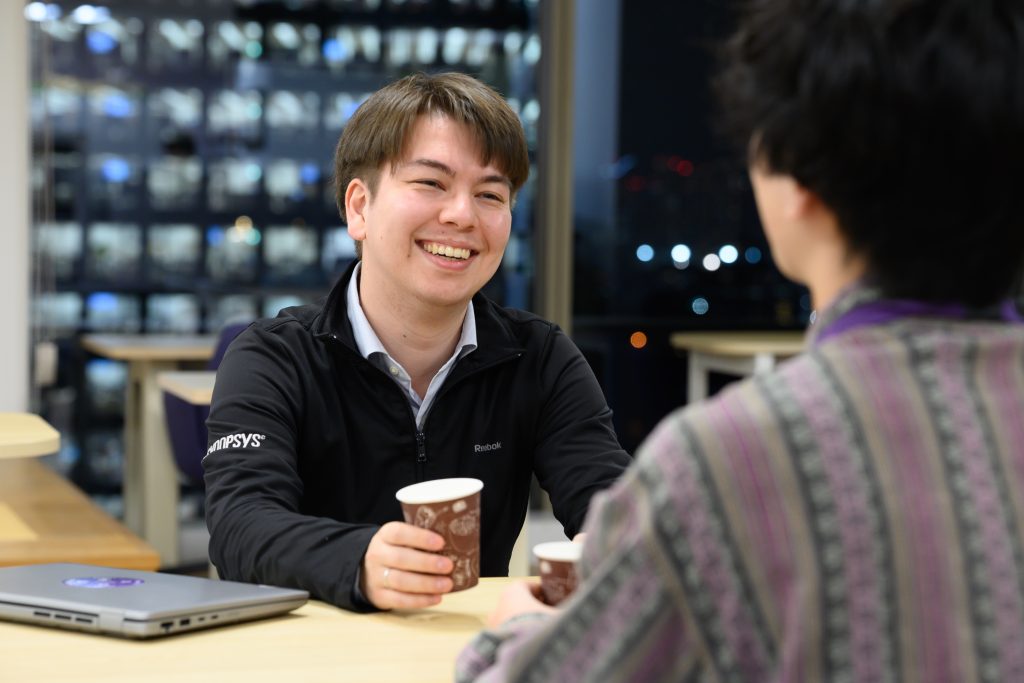
The multicultural experience and English education gained at university directly contribute to driving international projects. The ability to collaborate smoothly with diverse members inside and outside the company, as well as to make proposals in English, is a significant strength. In particular, the capability to work seamlessly with overseas teams without language barriers is clear evidence of how the university experience is being applied.
I also see that the attitude of carefully addressing details while keeping the big picture in mind reflects the perspective of “seeing the forest while looking at the trees” cultivated at university. Furthermore, the proactive approach—such as thorough preparation to align understanding among domestic and international teams—is a key factor in successfully managing complex proposal processes. The commitment to identifying the root cause of issues rather than relying on easy answers, and the focus on building long-term relationships based on fundamental problem-solving, will undoubtedly become a major strength in sales.