About
Alumni

FUJIMOTO Kohei
Hiroshima Electric Railway Co., Ltd. March 2025 Graduation
Updated December 2025
Discovering the World to See Your Community Clearly! What does “glocal learning” mean to a first-graduate of Eikei University of Hiroshima, who gained experience both in Japan and abroad and clarified his passion for community development?
Founded in April 2021 by Hiroshima Prefecture, Eikei University of Hiroshima (located in Naka Ward, Hiroshima City) is a public university unlike any other in Japan, dedicated to fostering the competencies—skills and abilities—needed to thrive in the real world. One of its distinctive features is its strong emphasis on connections with society. Students have numerous opportunities to engage with the real world not only through curricular activities but also through extracurricular ones.
As part of its practical learning approach, the university requires students to participate in Experiential and Practical Programs both in Japan and overseas. Each student must complete at least two such programs before graduation, including at least one overseas experience. Through these programs, Eikei University students build connections with diverse people, tackle social issues, and gain experience both locally and globally. This dual exposure nurtures an international perspective alongside a community-based mindset.
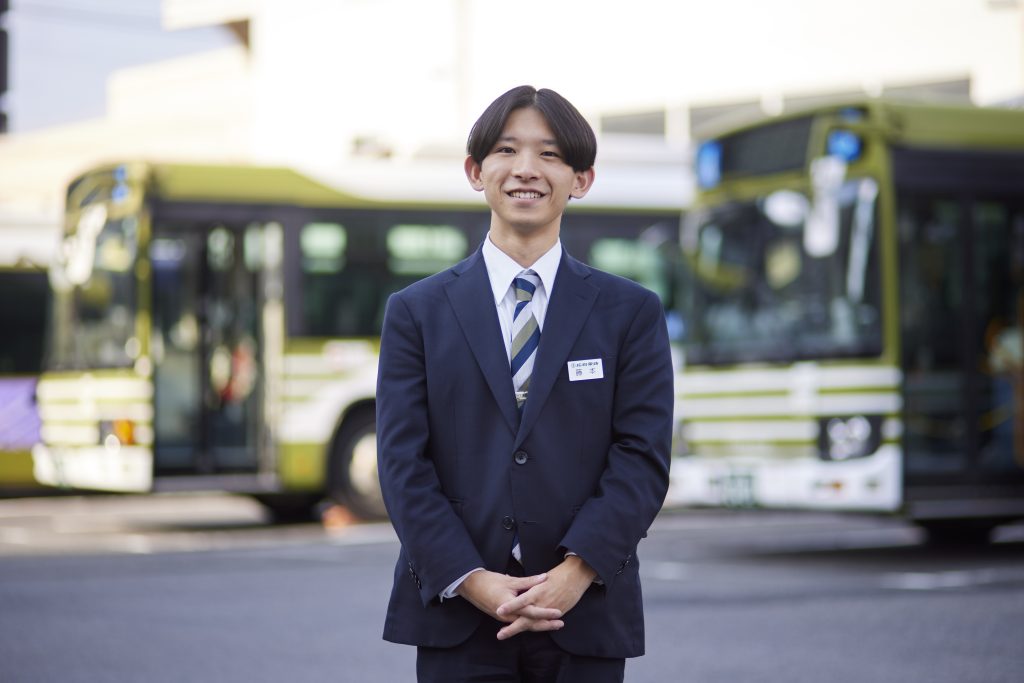
We spoke with FUJIMOTO Kohei, a first-generation graduate of Eikei University who now works at Hiroshima Electric Railway Co., Ltd., a company deeply rooted in the community through its train and bus services. He shared how his university experiences shaped his passion for community development and revitalization.
That’s Why I Keep Learning
—Were you always interested in community development and revitalization?
Not really—just vaguely. In high school, I didn’t have a clear vision for the future. I thought, “Maybe I’ll study economics.” But when I learned about Eikei University, I thought, “If I go there, I might find what I really want to do.”
I was drawn to the university’s philosophy: “Create the society you want to see in the future by identifying issues, designing solutions, collaborating with others, demonstrating leadership, and generating new social value.”
However, during my four years at university, while studying with a focus on community development, I often felt powerless. That’s why I decided, “I want to keep learning even after entering society,” and chose Hiroshima Electric Railway, where I could contribute to community building.
The Same Desire to Change
—You first learned about Hiroshima Electric Railway through the “Hiroshima Urban Core Conference,” a forum for discussing urban development, right?
Yes. A friend was interning at Hiroshima Electric Railway but couldn’t attend a meeting of the conference, so I went in his place. For me, it was an extracurricular activity—but I really enjoyed it. After that, I kept participating and even organized a candlelight event along a riverside space in Hiroshima during my time at university. The idea came from an event I experienced during a domestic internship at a hotel in Matsuno Town, Ehime Prefecture.
—Eikei University requires students to join both domestic and overseas programs. Where did you go abroad?
I spent two months at a hotel in Cambodia that was actively engaged in community-based development. Everyone there had a strong desire to contribute to their local area. Meeting such energetic people was inspiring.
I’ve realized something: rural areas often lack diversity because everyone knows each other. I felt that in both Ehime and Cambodia. But the desire to change isn’t limited by community size. Even Hiroshima, which is relatively urban, shares that same challenge. My experiences at home and abroad gave me confidence: “We can make it happen in Hiroshima too!”
—It seems you’ve developed a glocal perspective. Did you also work on solving local issues in your graduation project?
Yes. On Osakikamijima, an island in the Seto Inland Sea not connected to the mainland by bridge, I worked on a mechanism for community revitalization. We installed capsule toy machines at the port containing coupons for local shops, encouraging tourists to visit them. Creating systems that foster human connections is something that relates to my current job as well.

Eikei University Enriched My Life
—Now you’re involved in bus operation planning at the Bus Business Division, correct?
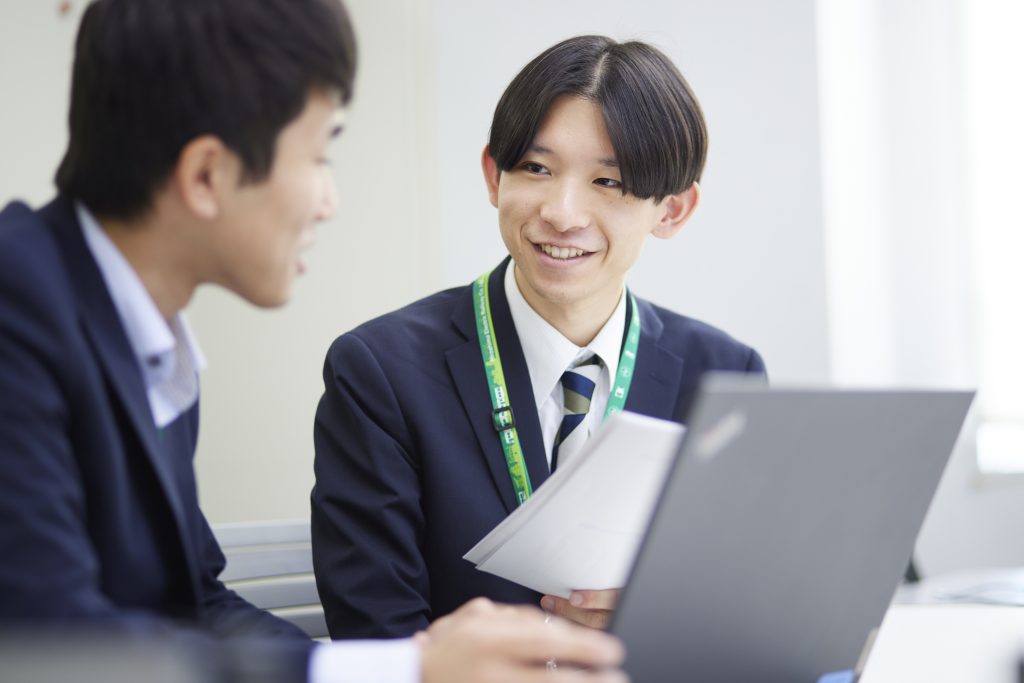
Yes, mainly designing bus timetables. We aim to provide convenient public transportation by considering routes, schedules, and services.
Even a single aspect of urban development—like bus operations—faces numerous challenges. Questions such as “Why are buses being reduced?” or “Won’t fewer buses accelerate depopulation?” don’t have easy answers. I believe solutions will come gradually through persistent efforts by those of us on the ground. As a first-year employee, I’m still learning the big picture, but that helps me see what really matters. The problem-solving approaches I learned through PBL (Project-Based Learning Exercises) at university are proving invaluable now.
—Your practical experiences seem to have become part of you.
Absolutely. But practice alone isn’t enough—knowledge and theory are essential. At first, learning systems thinking and design thinking felt abstract, but applying them in real-world activities made them click. Repeating this cycle of learning and doing helped me develop critical insight and other competencies.
Surprisingly, my English skills from university have also come in handy. I once created English announcements for bus audio systems, and those announcements are still being used today.
—Did Eikei University change you compared to your high school self?
In high school, I gave a speech on “The Closure and Survival of Local Rail Lines” at an English contest—a theme that connects to my current work. So, in essence, I haven’t changed. What has changed is that my “I want to do this” became clear. Eikei University brought that out. It enriched my life.
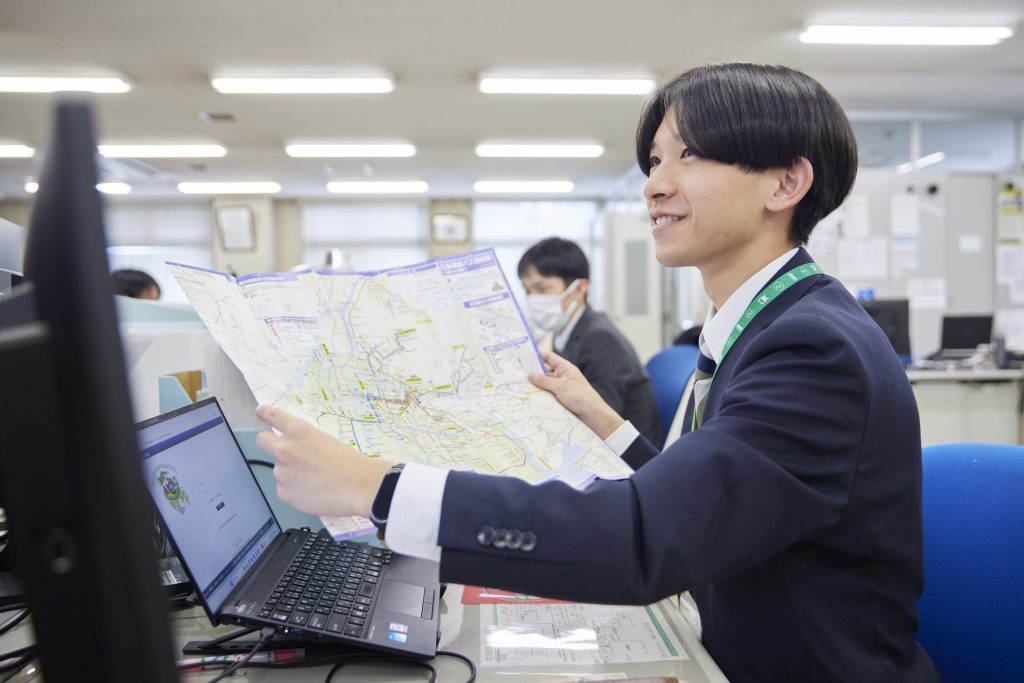
■Comment from a supervisor at Hiroshima Electric Railway Co., Ltd.
Bus operation planning requires collaboration with internal and external stakeholders. Despite being in his first year, Fujimoto takes initiative on his assigned themes and actively works toward solutions.
Yes. Fujimoto manages routes with many foreign tourists. His awareness of issues and efforts to address them clearly reflect the skills he gained at university.