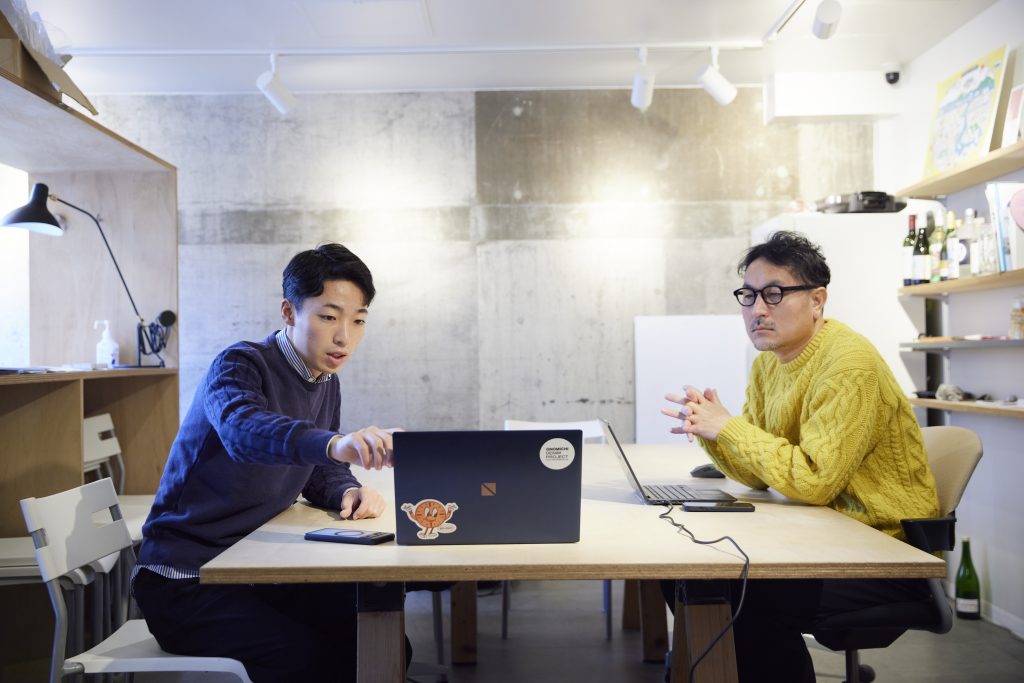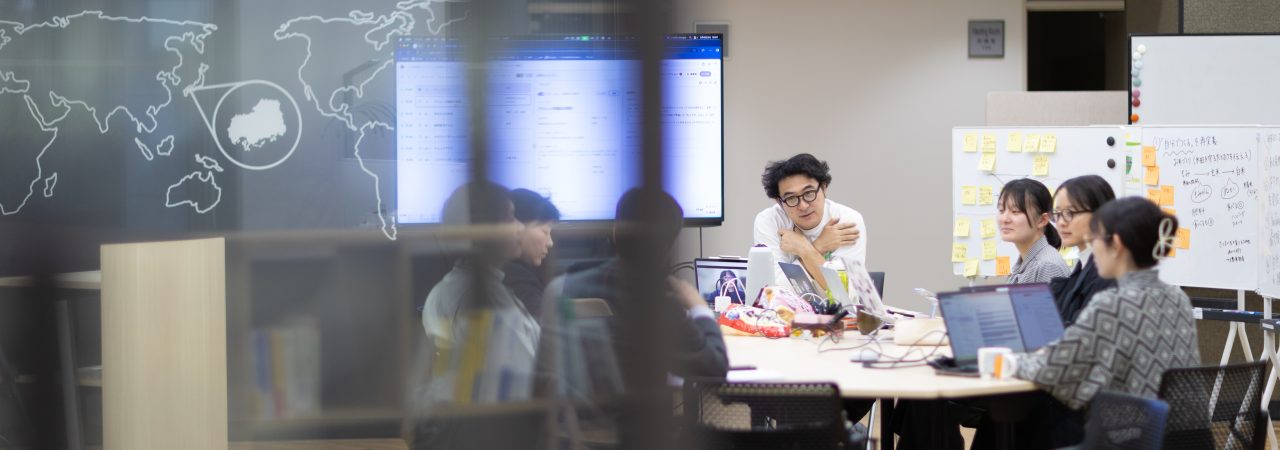
The curriculum structure at Eikei University of Hiroshima is designed to foster students’ competencies through two components: the acquisition of knowledge and skills, and their application in real-world projects.
To enable students to connect, apply, and expand the knowledge and skills gained in class across various fields and contexts, they also engage in activities outside the formal curriculum. The university actively supports students’ independent initiatives and provides opportunities for extracurricular projects.
Project-Based Learning Exercises(PBL)
Eikei University of Hiroshima incorporates Project-Based Learning Exercises (PBL) into its curriculum. In the first year, all students are required to take “Introduction to Social System Design” and “Introduction to Problem Solving,” which help them recognize the knowledge and skills they need to develop.
In the second and third years, students participate in three exercises where they investigate the root causes of issues provided by companies and other organizations and propose solutions. Through these experiences, they cultivate abilities such as problem identification and resolution, collaboration with others, and perseverance.
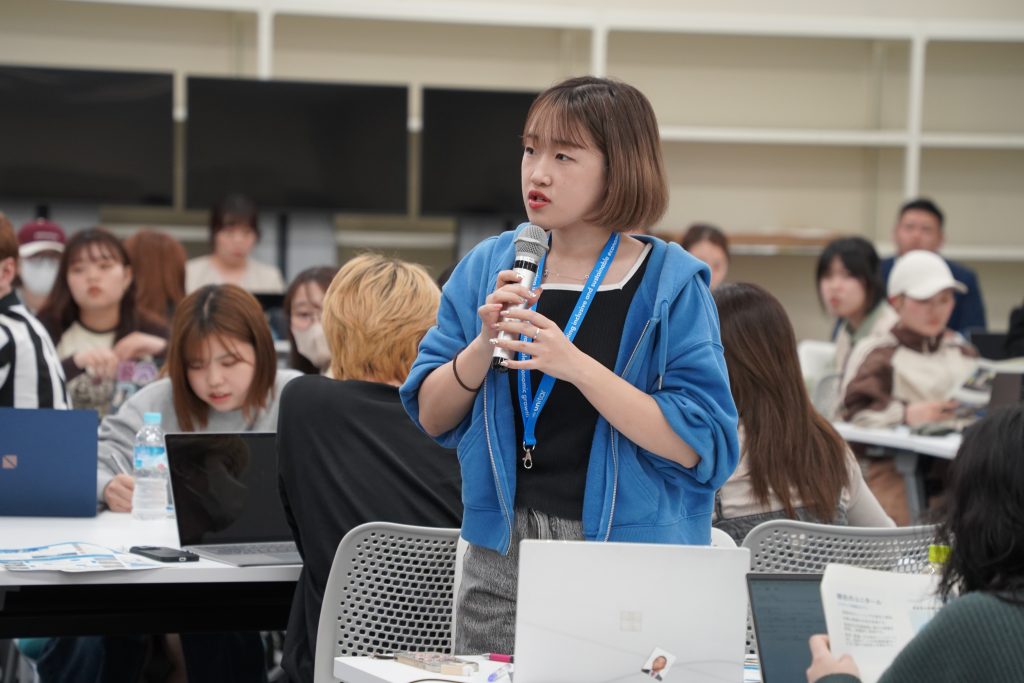
Please click here for details on Project-Based Learning Exercises (PBL).
Experiential and Practical Programs
This program is implemented in collaboration with participating companies, local governments, international organizations, and NPOs that are members of the Eikei University of Hiroshima Council of Practical Learning Platform. It offers opportunities for internships, volunteer activities, and study abroad. Students are required to engage in at least one overseas activity during their enrollment and earn a minimum of 4 credits (two courses or more). Under the guidance of faculty members, the curriculum incorporates pre-learning and post-learning to ensure the enrichment of program activities and the deepening of learning.
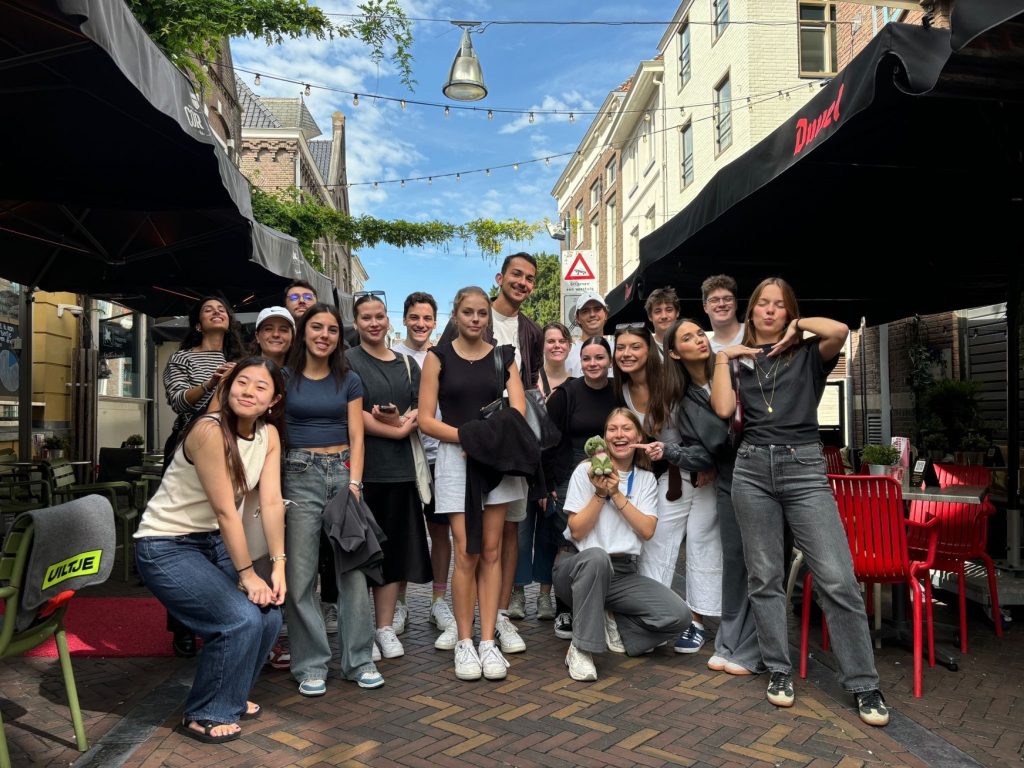
Please click here for details on Experiential and Practical Programs.
Degree Project
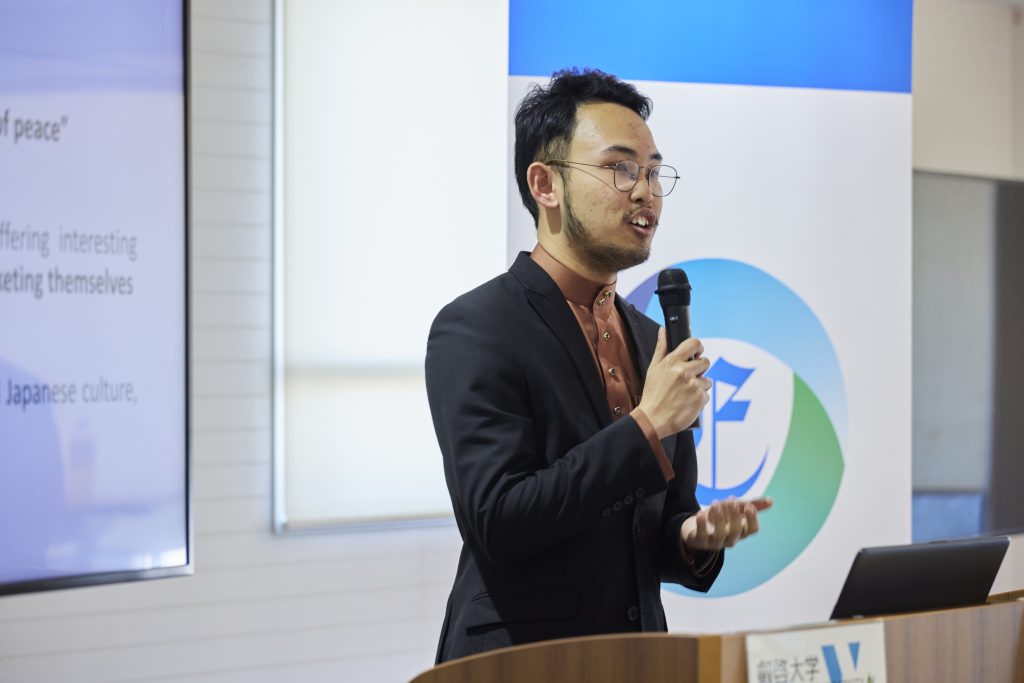
As the culmination of their university learning, students set their own themes and aim to clarify issues and develop solutions. Research on individual graduation project themes is conducted in a seminar-style format with faculty members providing close guidance. At both the mid-term and final reporting sessions, external evaluators such as stakeholders from businesses and government agencies are invited to provide feedback on each research project from perspectives such as originality and feasibility. Based on this feedback, students compile a report and present their results in a public presentation.
Please click here for details on Degree Project.
Co-Creation Projects,Student Collaboration Projects
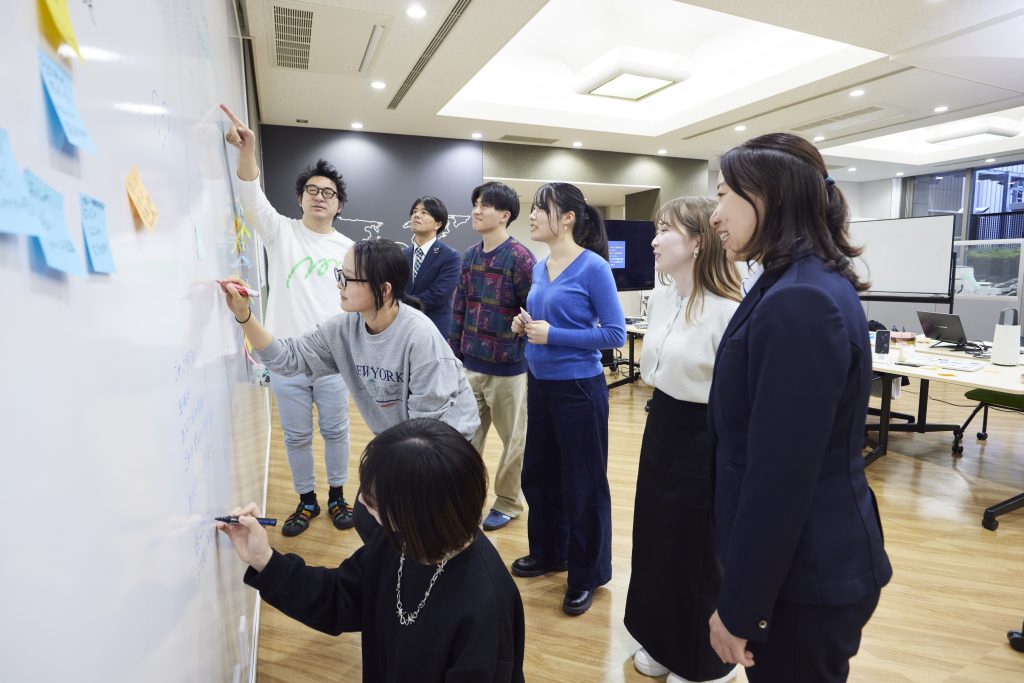
In the “Co-Creation Projects,” companies, organizations, faculty members, and students form teams and work together for several months to address corporate challenges and create new value, aiming to drive organizational transformation and growth while fostering innovative talent. Specifically, faculty members with project management expertise engage in dialogue with executives to structure the issues faced by the company.
In the “Student Collaboration Projects,” employees from the company and students from Eikei University join the team to identify the underlying core issues within the structured challenges and conduct verification to develop solutions.
Please click here for details on Co-Creation Projects,Student Collaboration Projects.
Entrepreneurship Development
To foster students’ entrepreneurship, we organize seminars and courses that provide support for starting businesses and ventures. In addition, we have established on-campus systems such as the “Student Project Grant Program” to support students’ project activities.