
Degree Project Case Introduction

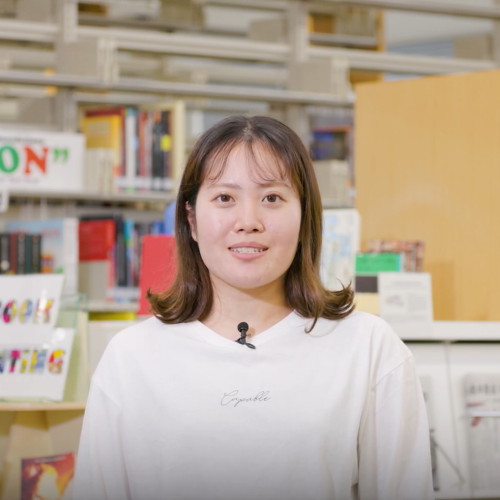
SEO Minori
April 2022 admission
Amateur Boxing and Gender: Examining Gender Equality through My Own Experience
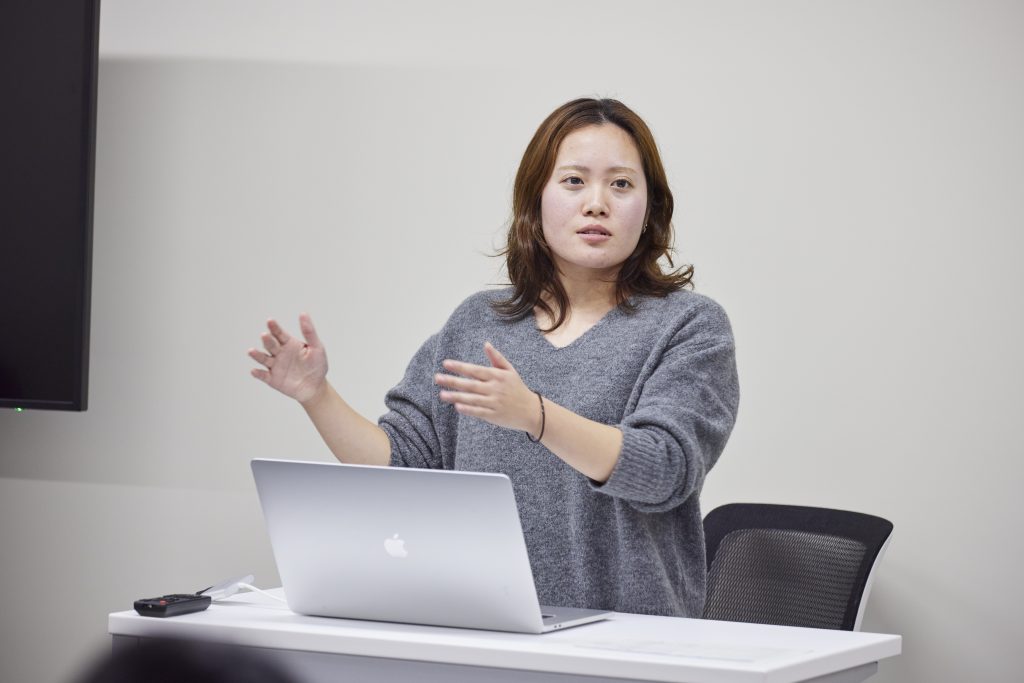
From the time I was in the sixth grade of elementary school until my senior year of high school, I continued practicing amateur boxing. Throughout those years, I gradually developed questions about the differences in how male and female boxers are treated. One of the reasons I chose to enroll at Eikei University of Hiroshima was my desire to engage in issues related to gender. When deciding on the theme for my Degree Project, I chose to refocus on the intersection of the sport I had long been involved in and gender issues.
In amateur boxing, male high school boxers are commonly referred to simply as “high school student,” while female boxers of the same age are instead labeled as “female” The routes boxers take before entering the ring and the changing facilities are also designed with male boxers as the default standard.
There are differences in rules as well. While adult male boxers do not wear headgear, adult female boxers do. Female boxers may also wear chest guards to protect their bodies. These measures can be seen as considerations for safety; however, I came to view them as potentially representing benevolent sexism—a form of gender discrimination rooted in seemingly protective intentions.
Based on these experiences, I defined the objective of my Degree Project as examining what gender equality should look like within amateur boxing.
To explore this question, I focused on autoethnography and fieldwork.
In the autoethnographic component, I treated my own boxing experience as data, carefully revisiting routines from training sessions, competitions, and training camps. I reflected on questions such as “At what moments was I conscious of gender?” and “What kinds of adjustments did I make?” and articulated these experiences in words.
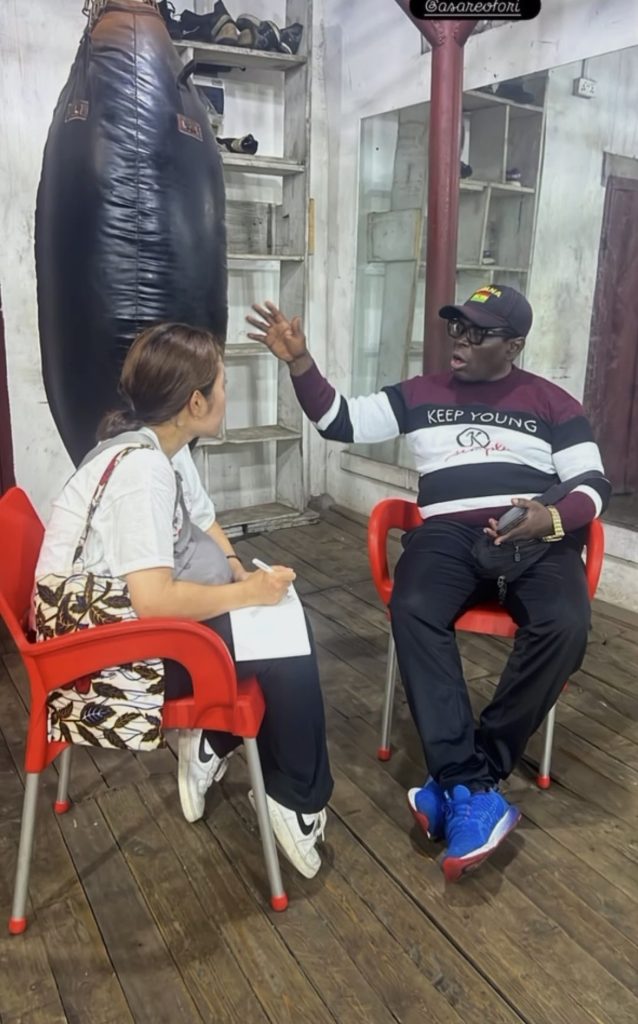
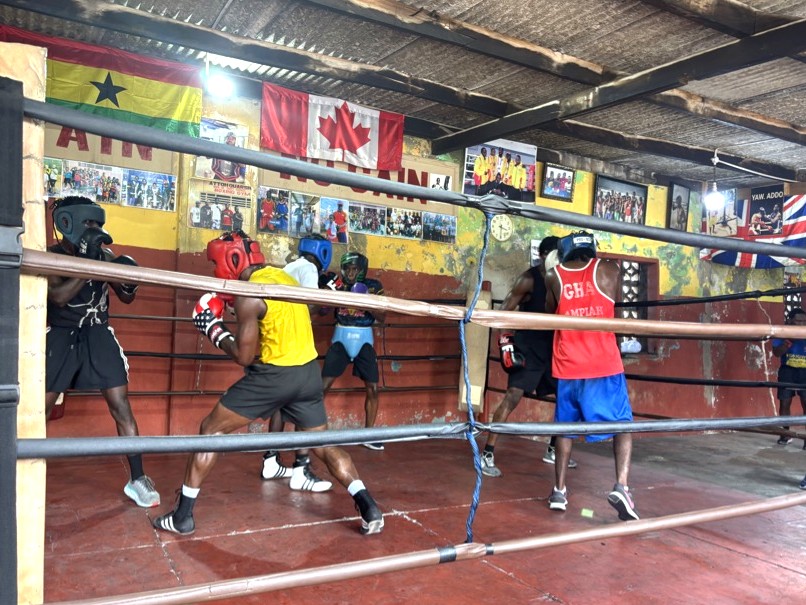
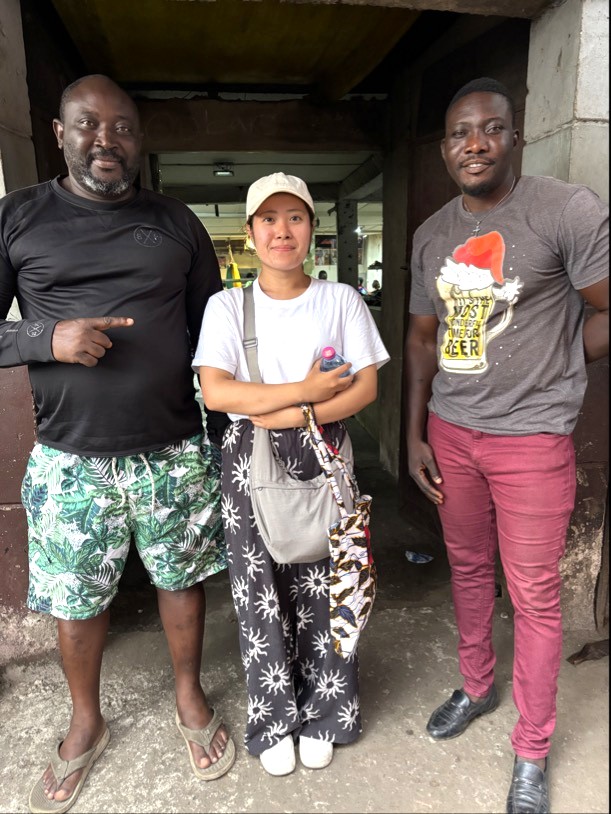
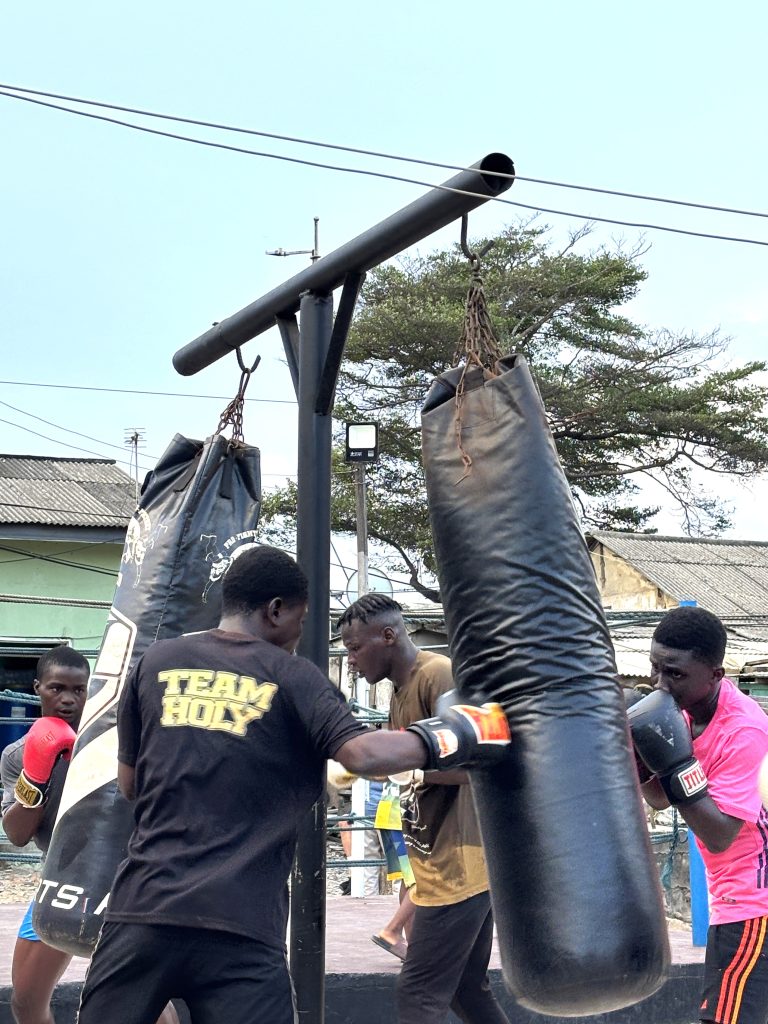
In addition, I conducted fieldwork in both Japan and Ghana. I chose Ghana because boxing is a major sport there and because I have long held an interest in Africa. In Ghana, I visited boxing gyms in the capital city of Accra and interviewed members of the women’s national team as well as the federation president.
During fieldwork, I made a conscious effort to take detailed notes, even about aspects that initially seemed unrelated to my research theme. By recording observations about urban buildings, boxers’ clothing, conversations, and the behavior of onlookers, patterns gradually emerged regarding the spatial structure of boxing gyms and how boxing is positioned within the local community. I learned this meticulous note-taking method from Professor TAGUCHI, who has extensive experience conducting fieldwork abroad.
Within Japan, I also visited Inter-High School Championship venues, boxing gyms, and high school boxing clubs to conduct observations and interviews.
As my research progressed, I came to prioritize not focusing solely on the disadvantages faced by female boxers. Instead, I aimed to reconsider who is restricted—and in what ways—by specific rules and language, including male boxers as well. I believe that properly acknowledging the perspectives of male boxers is a crucial step toward achieving gender equality.
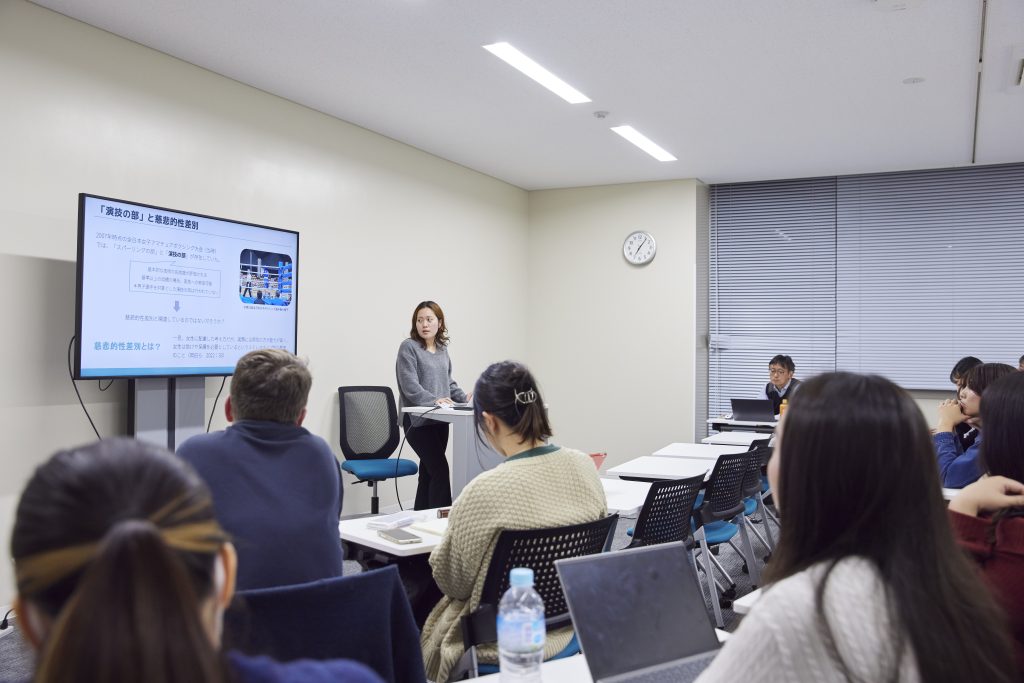
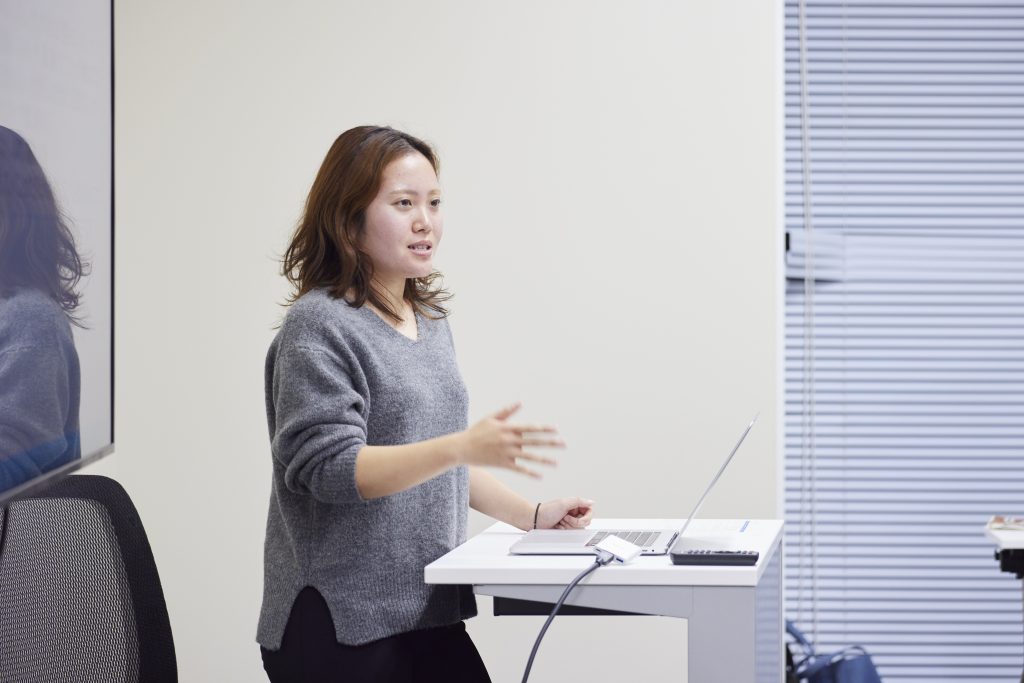
At the Second-Degree Project Presentation Session, held on November 11, 2025, I received feedback from external evaluators SORA Masao of the Tourism Division, Industry Department, Hatsukaichi City, and KAMAHARA Ryuichi of Digital Solution Co., Ltd.
Mr. SORA asked for my personal perspective on how the headgear regulations should ideally be structured. In response, I explained the dilemma I see while safety considerations for women do not necessarily lead to the empowerment of female boxers, historical fatalities also suggest that similar considerations may be necessary for male boxers. I was also advised that analyzing gender awareness in professional boxing and other sports could help clarify the unique challenges faced by amateur boxing.
Mr. KAMAHARA suggested further expanding the analytical framework beyond the dual axes of professional vs. amateur, male vs. female, and Japan vs. Ghana. By comparing other sports and other countries, he noted, new perspectives and insights might emerge.
Working on this Degree Project also brought changes to my own way of life. Although I used to be shy, conducting fieldwork in Ghana pushed me to make phone calls in English, ask local people for help, and interview individuals I had just met. After returning to Japan, I found myself more willing to speak to foreigners in need and engage in conversation with customers at my part-time job. Through these experiences, I began to realize, “I can actually take action.”
While I cannot draw a simple conclusion about how to achieve gender equality in amateur boxing, my desire to remain involved in issues related to sports and gender after graduation remains strong. In sports environments that have long been considered male-dominated, I hope to contribute to initiatives that empower female boxers.