
About
Alumni

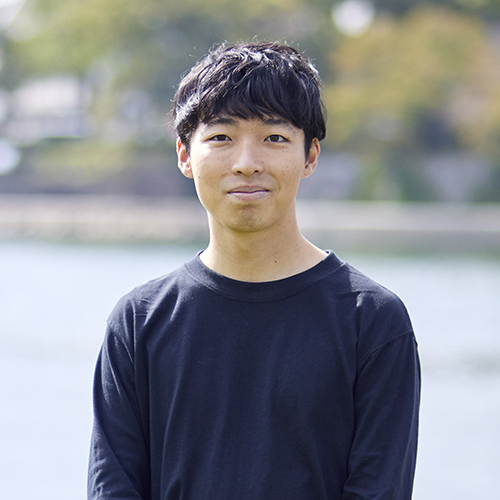
KIMURA Yuhei
Representative Director, Suitohiroshima Inc. March 2025 Graduation
Updated December 2025
Designing Social Questions and Pursuing Answers in the Real World —
How a First-Cohort Graduate of Eikei University of Hiroshima Is Using Social System Design to Launch a Startup in Hiroshima
Eikei University of Hiroshima opened in April 2021 with a mission to design social systems and realize a better future for society.
With its single department—the Social System Design—the university offers small-group, active-learning–centered education that nurtures students who can identify social issues and design new value for society.
Social System Design is a methodology for formulating questions that arise in society and pursuing answers through one’s own inquiry.
It integrates systems thinking, which allows students to see the structure of society from a broader perspective and identify core issues, with design thinking, which cultivates the ability to envision an ideal future and bring ideas into action. Together, these skills enable students to generate innovation.
Through Eikei’s unique “cycle of acquisition of knowledge/skills and practices,” students develop these abilities not only in the classroom but also through direct engagement with society.
As a result, students develop strong entrepreneurial mindsets.
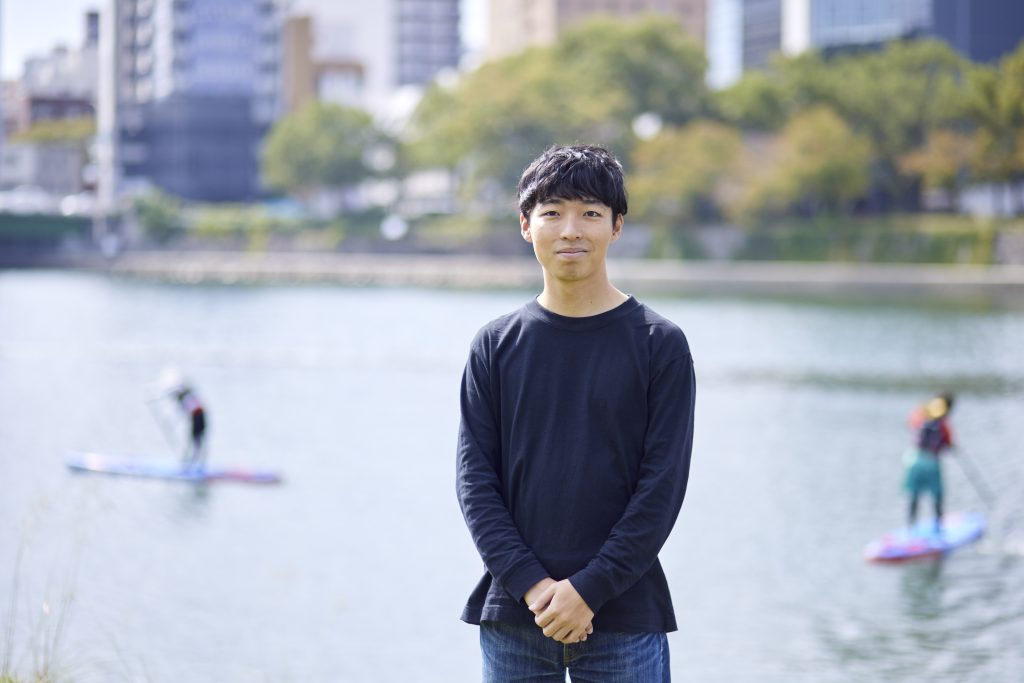
We spoke with Yuhei Kimura, a first-cohort graduate who founded Suitohiroshima Inc in March 2025 while still a student. He shared how his passion for entrepreneurship grew over his four years at the university and how the methods of Social System Design continue to support his work today.
Encounters On and Off Campus That Inspired Entrepreneurship
― You founded your company in March 2025, just before graduation. Did you always intend to start a business rather than pursue traditional employment?
Not at all. My desire to start a company grew gradually through numerous encounters I had at Eikei.
I am originally from Iwakuni in Yamaguchi Prefecture. After coming to Hiroshima for university, I discovered its charm as a “city of water.” Through activities both on and off campus, I met local community-building organizations and experienced the warmth and openness of people in Hiroshima. These encounters made me feel strongly that I wanted to start a business here.

― Even so, entrepreneurship seems like a high hurdle.
Meeting Eikei faculty and staff members really changed my perspective. Many of them think flexibly about career development, which helped me imagine my own future more freely.
My classmates also came from various countries and regions, and the diversity of values I encountered was eye-opening. I even met the friend who eventually cofounded the company with me. We said, “Let’s choose the option that excites us more than the one we hesitate about!”—and that became the push we needed.
The Challenge of Designing Social Systems From Scratch
― What did you value most when establishing your company?
Our core motivation is to revitalize Hiroshima.
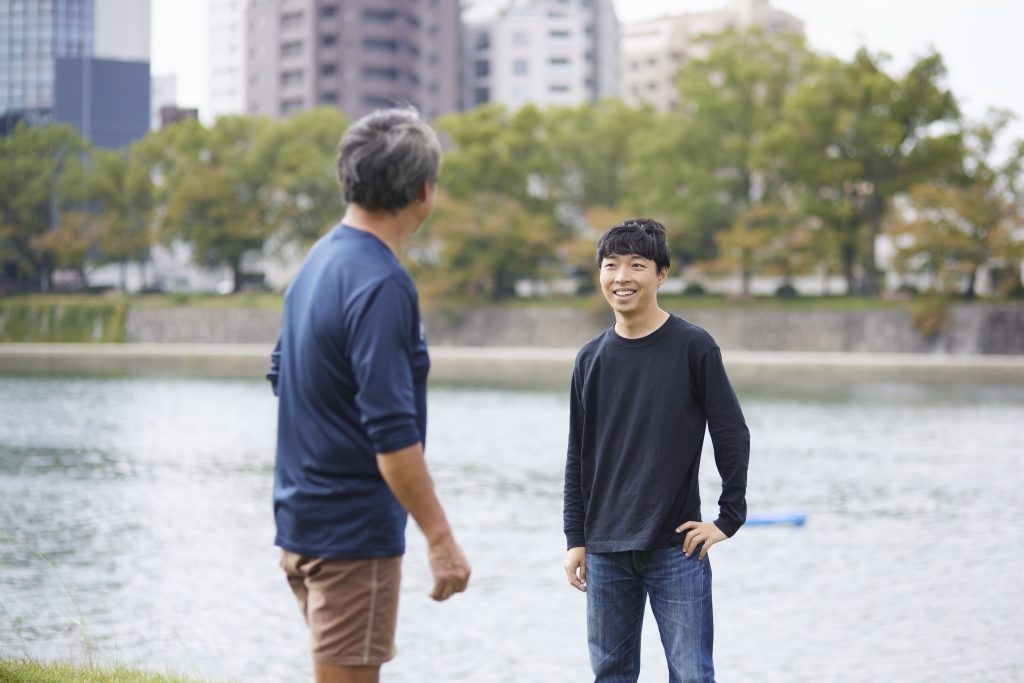
Although the city faces challenges such as youth outmigration, its global recognition—evident from the steady stream of international visitors—is extraordinarily high. We wondered whether Hiroshima could be revitalized from a new angle, and thus began exploring how water transportation could support a city where urban functions and natural environments coexist harmoniously.
Specifically, we are envisioning the operation of hovercraft services that could be used for commuting, school travel, and tourism. We are experimenting with different approaches, including collaborating with industry, academia, and government. Our goal is to create a prototype within the next few years and move toward operational implementation.
― Have the methods of Social System Design been useful as you develop your business?
Absolutely.
Connecting Hiroshima through water transportation is a completely new initiative—meaning we must design its social structure from zero. To do this, we must take a holistic perspective while systematically addressing individual challenges.
Business planning requires fundraising, talent acquisition, route planning, and many other components. Linking these elements to build a path toward realization requires the core process of Social System Design: formulating one’s own questions and exploring how best to solve them.
We also launched a second business—a walking program that integrates entertainment and behavioral science to encourage healthier lifestyles. The project was selected for a Hiroshima Prefecture support initiative, and demonstration experiments have begun along waterfront areas. This initiative follows the same methodology: identifying a social issue (lack of physical activity among young people) and designing new value (earning points through walking that can be used to support one’s favorite artists or teams).
Becoming Someone Who Can Say “Follow My Lead”
― What questions did you explore during your time at Eikei?
For my degree project on Hiroshima’s urban appeal, I asked:
“How can residents feel connected to the natural environment?”
and
“What enables people to interact more with one another?”
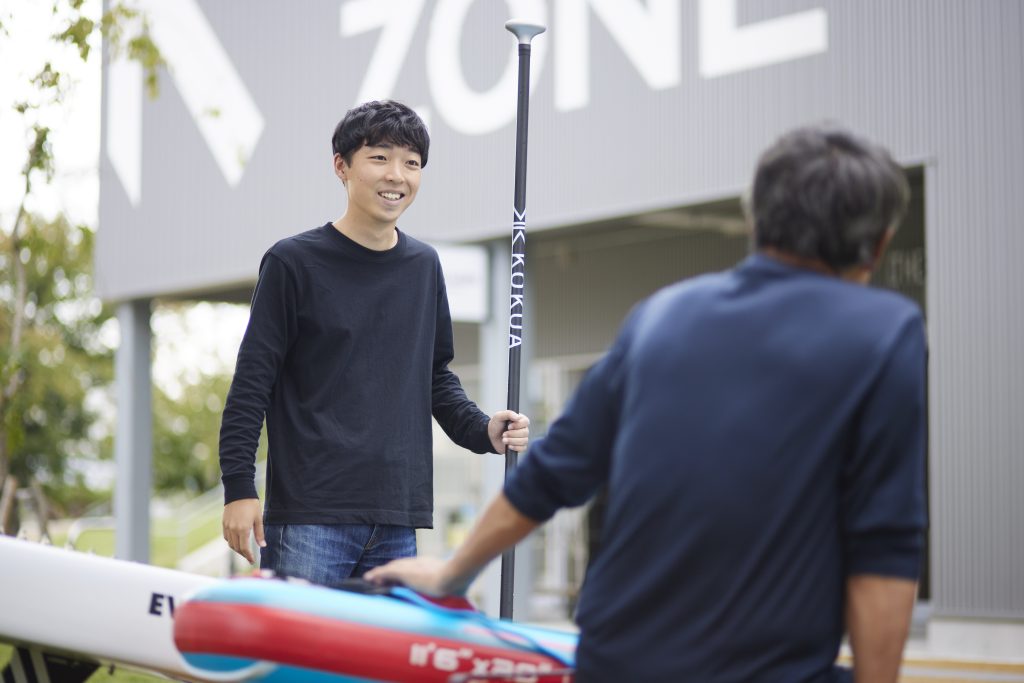
I concluded that activating waterfront spaces was key, so I organized the Hiroshima Outdoor Book Café, an event where people could enjoy reading and drinks along the riverside.
Through visitor surveys, I found evidence that natural environments in urban settings can strengthen residents’ attachment to the city. This insight led me to envision ways to attract more people to the waterfront—an idea that ultimately evolved into the water transportation services my company now pursues.
― It seems your future changed significantly thanks to Eikei University of Hiroshima.
As a child, I dreamed of becoming a rocket engineer.
But Eikei guided me toward an even bigger dream: revitalizing Hiroshima.
Sure, many people can become rocket engineers. But when it comes to actually saying, “Let’s build a rocket—follow my lead!” very few can take that first step. Eikei trains people who can take that step—people who understand what preparation is needed and who can put plans into action.